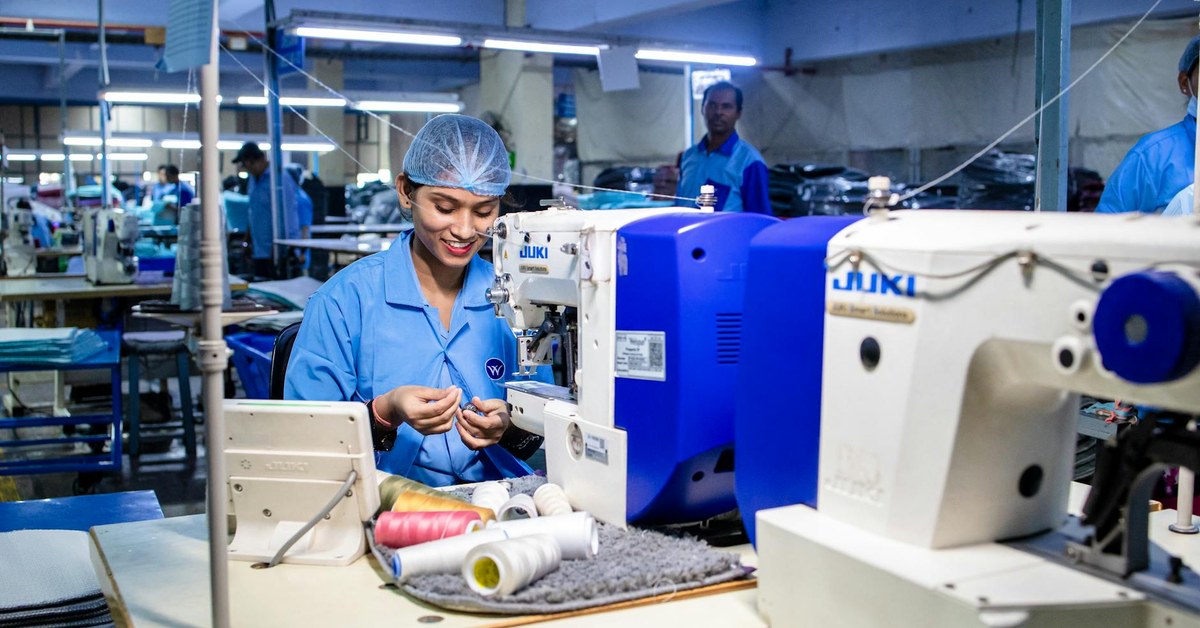

Quality assurance efficiency in manufacturing companies represents a critical strategic intersection where the imperative to uphold product integrity meets the demand for lean, agile operations. It is a nuanced balance, requiring manufacturers to move beyond traditional reactive inspection models towards integrated, proactive systems that embed quality from design to delivery, thereby ensuring consistent standards without incurring the friction of operational bottlenecks or the prohibitive costs of rework and recalls. Achieving this balance is not merely an operational goal; it is a fundamental driver of competitive advantage and sustained profitability in a challenging global market.
The Pressures on Manufacturing Quality Assurance
The manufacturing sector operates under relentless pressure to deliver products that meet increasingly stringent quality standards, often at lower costs and faster speeds. This environment places immense strain on traditional quality assurance processes. The cost of poor quality, or CoPQ, is a substantial drain on resources, often underestimated by leadership teams. Industry analyses suggest that CoPQ can account for 15 to 20 percent of sales revenue for some manufacturers, and in severe cases, it can exceed 40 percent. This figure includes not only the obvious costs of scrap, rework, and warranty claims but also the less visible expenses associated with lost customer loyalty, damaged brand reputation, and delayed product launches.
Consider the recent trends in product recalls across major markets. In the United States, for instance, the Consumer Product Safety Commission reported over 250 product recalls in 2023, impacting millions of units and costing companies hundreds of millions of dollars in direct expenses, not including the long-term damage to brand equity. Similarly, in the European Union, the Safety Gate Rapid Alert System notified authorities of thousands of unsafe non-food products, leading to withdrawals and recalls that significantly disrupt supply chains and consumer trust. The UK also sees a consistent pattern of product safety issues, with various regulatory bodies issuing alerts and requiring corrective actions that can cripple smaller manufacturers and dent the profitability of larger ones.
Beyond the direct financial implications, the complexity of modern supply chains exacerbates the challenge. Manufacturers often rely on a global network of suppliers, each with their own quality control practices. Ensuring consistent quality across this intricate web demands sophisticated monitoring and verification systems. A single component failure from a distant supplier can cascade into widespread production issues, jeopardising entire product lines. The shift towards just-in-time inventory further reduces the buffer for errors, meaning quality deviations can halt production almost immediately, leading to significant financial penalties and missed market opportunities.
Regulatory scrutiny also continues to intensify. Sectors such as aerospace, medical devices, and automotive face rigorous compliance requirements that mandate extensive documentation, traceability, and validation at every stage of production. Non-compliance can result in hefty fines, legal action, and even market exclusion. For example, a medical device manufacturer in the EU could face fines upwards of €10 million for breaches of Medical Device Regulation, alongside forced market withdrawals. These external pressures underscore why a reactive, inspection-heavy approach to quality assurance is no longer sustainable. It is a liability that undermines operational stability and financial performance. Instead, manufacturing companies must proactively build quality into their processes, seeking genuine quality assurance efficiency to remain competitive and compliant.
Beyond Compliance: Why QA Efficiency is a Strategic Differentiator
Many manufacturing leaders still view quality assurance primarily as a necessary cost centre, a gatekeeper function designed to catch defects before they reach the customer. This perspective, while understandable, fundamentally misunderstands the strategic potential of true quality assurance efficiency in manufacturing companies. Beyond merely avoiding penalties and maintaining compliance, a highly efficient QA function can become a powerful engine for competitive advantage, driving profitability, encourage innovation, and cementing market leadership.
Firstly, consider the direct impact on profitability. Reducing the cost of poor quality directly translates to improved margins. When defects are prevented at source, rather than detected downstream, manufacturers save on material waste, rework labour, energy consumption, and logistical costs associated with returns and replacements. For a typical manufacturing operation, every dollar or pound invested in preventing defects early can save ten dollars or pounds in correction costs later in the production cycle, and potentially hundreds if a product reaches the market and requires a recall. This is not a theoretical saving; it is tangible capital that can be reinvested in research and development, workforce training, or market expansion.
Secondly, efficient quality assurance significantly enhances brand reputation and customer loyalty. In an increasingly transparent marketplace, product failures are quickly amplified through social media and online reviews, causing rapid and widespread damage to a brand's image. Conversely, consistent delivery of high-quality products builds trust and advocacy, which are invaluable assets. A recent study indicated that 85 percent of consumers in the US and Europe consider product quality to be a primary factor in their purchasing decisions, and 70 percent are willing to pay a premium for brands with a proven track record of reliability. This suggests that a commitment to quality, demonstrated through efficient QA processes, directly influences market share and pricing power.
Furthermore, an optimised QA system acts as an accelerator for innovation and time to market. When quality is embedded into design and production processes, new products can move from concept to commercialisation with greater speed and confidence. Development cycles are shortened because less time is spent on redesigns, retesting, and defect resolution. This agility allows manufacturers to respond more rapidly to market trends and introduce new offerings ahead of competitors. For example, companies that integrate quality checks into their rapid prototyping and iterative design processes report reducing their product development timelines by up to 20 percent, giving them a critical edge in fast-moving industries like consumer electronics and automotive components.
Lastly, quality assurance efficiency supports operational excellence and resource optimisation. By systematically identifying the root causes of defects and implementing preventive measures, manufacturers can streamline their production lines, reduce variability, and improve overall equipment effectiveness. This continuous improvement mindset, driven by strong QA data, leads to higher throughput, lower operational costs, and a more predictable production schedule. For instance, a major European automotive supplier, through an overhaul of its QA protocols, managed to reduce production line stoppages due to quality issues by 40 percent over two years, resulting in millions of pounds in annual savings and a significant boost to their overall productivity. This demonstrates that investing in efficient quality assurance is not merely a defensive measure; it is an offensive strategy that strengthens a company's fundamental operational capabilities and positions it for sustained success.
What Senior Leaders Get Wrong About Quality Assurance Efficiency
Despite the clear strategic advantages, many senior leaders in manufacturing companies inadvertently hinder their own quality assurance efficiency. This often stems from deeply ingrained assumptions and an incomplete understanding of what modern quality management truly entails. One of the most prevalent misconceptions is viewing quality assurance as a standalone department or a cost centre rather than an integrated, value-adding function. When QA is treated as a separate silo, its budget is often the first to be cut during economic downturns, and its recommendations are seen as impediments to production speed, rather than safeguards for long-term profitability. This perspective encourage an adversarial relationship between production and quality teams, leading to missed opportunities for collaborative improvement.
Another common error is an overreliance on manual inspection and reactive problem-solving. Many manufacturers still depend heavily on human inspectors at the end of the production line to catch defects. While human oversight remains valuable, this approach is inherently inefficient and prone to error, especially with increasing production volumes and product complexity. It is also reactive, meaning defects are only identified after resources have been expended on producing faulty goods. This method fails to address the root causes of quality issues, leading to recurring problems and a continuous cycle of rework and waste. Data from a recent UK manufacturing survey showed that companies heavily reliant on end-of-line inspection reported defect rates 15 to 20 percent higher than those employing proactive quality control measures earlier in the process.
Leaders also frequently misunderstand the power of data in driving quality improvements. Many organisations collect vast amounts of production and quality data, yet fail to extract actionable insights from it. Without the right analytical tools and expertise, this data remains dormant, providing little value beyond historical records. Consequently, decisions about process improvements are often based on anecdotal evidence, gut feelings, or superficial observations, rather than empirical analysis. This leads to ineffective interventions that do not address the systemic issues contributing to poor quality or inefficiency. A US study on manufacturing data maturity revealed that while over 90 percent of firms collect production data, fewer than 30 percent effectively use it for predictive quality analysis.
Furthermore, there is often insufficient investment in modern quality management systems and the necessary training for the workforce. Leaders might be reluctant to allocate capital to advanced sensor technologies, real-time analytics platforms, or automated inspection equipment, perceiving these as expensive upgrades with unproven returns. However, these technologies are precisely what enable a shift from reactive to proactive quality management, allowing for early detection of deviations and predictive maintenance of equipment. Similarly, underinvesting in training means that employees, from the shop floor to middle management, may lack the skills to effectively use new tools, interpret data, or contribute to a culture of continuous improvement. This creates a gap between the desired state of quality assurance efficiency and the operational reality.
Finally, a lack of clear, consistent leadership commitment to quality as a strategic priority is a significant impediment. If quality goals are not explicitly linked to broader business objectives, or if leadership's actions do not consistently reinforce the importance of quality, then employees across the organisation will naturally prioritise other metrics, such as output volume or cost reduction, even at the expense of quality. This creates a cultural barrier to achieving true quality assurance efficiency in manufacturing companies. Leaders must actively champion quality, embed it in performance metrics, and demonstrate through their decisions that quality is an indispensable component of the organisation's overall success.
The Strategic Implications of True QA Efficiency
When manufacturing companies genuinely achieve quality assurance efficiency, the implications extend far beyond mere cost savings or defect reduction. This strategic approach transforms quality from a defensive operational necessity into a proactive driver of market leadership, resilience, and sustainable growth. It fundamentally alters a company's competitive posture and its capacity for future expansion.
One of the most significant strategic implications is the creation of a powerful competitive advantage. In markets saturated with similar products, consistent, superior quality becomes a crucial differentiator. Companies known for their unwavering commitment to quality can command higher prices, attract premium customers, and build stronger brand equity. This is particularly evident in sectors like luxury goods, precision engineering, and pharmaceuticals, where reliability is paramount. For example, a European manufacturer of high-precision components that reduced its defect rate by 70 percent through integrated QA systems not only saw its CoPQ drop by €15 million annually but also secured exclusive contracts with major aerospace clients, significantly increasing its market share and revenue streams. This illustrates how quality assurance efficiency in manufacturing companies directly translates into tangible business growth.
Moreover, true QA efficiency encourage greater organisational agility and resilience. By implementing strong, data-driven quality systems, manufacturers gain deeper insights into their processes, allowing them to identify potential risks and respond quickly to disruptions. This proactive capability is invaluable During this time of volatile supply chains and rapidly changing market demands. When a new material is introduced, or a production line is reconfigured, an efficient QA framework ensures that quality standards are maintained without extensive delays or costly trial and error. This capability allows companies to adapt more quickly to technological advancements, regulatory shifts, and unexpected external events, maintaining operational continuity and mitigating potential losses. A US-based electronics manufacturer, with an advanced, integrated quality system, was able to pivot its production lines to meet new demand for a critical component during a global supply chain crisis, largely because its established QA protocols allowed for rapid validation of new processes and materials.
Furthermore, an efficient QA system supports innovation and product diversification. When the foundational processes for quality are strong, research and development teams have more freedom to experiment with new designs, materials, and technologies. They can iterate faster, knowing that quality checks are integrated throughout the development cycle, reducing the risk of costly failures later on. This accelerates the introduction of new products and services, opening up new market segments and revenue opportunities. Companies that have successfully embedded quality from the design phase report a 25 percent faster time to market for complex products compared to their peers who rely on post-production inspection. This speed to market is a critical factor in maintaining relevance and capturing first-mover advantages.
Finally, a culture of quality assurance efficiency strengthens talent retention and attraction. Employees, particularly skilled engineers and technicians, are more engaged and motivated when they work for an organisation that values excellence and provides the tools and processes to achieve it. A well-structured QA environment reduces frustration associated with rework, customer complaints, and constant firefighting, creating a more positive and productive workplace. This commitment to quality also makes a company more attractive to top talent, who seek organisations that are leaders in their field and demonstrate a clear commitment to best practices. This human capital advantage is increasingly vital in a competitive labour market, ensuring the company has the expertise to drive future growth and innovation.
In essence, moving beyond a purely compliance-driven approach to embrace comprehensive quality assurance efficiency positions manufacturing companies not just to survive, but to thrive. It builds a foundation of operational excellence that drives profitability, enhances brand value, accelerates innovation, and creates a more resilient and attractive organisation. For senior leaders, understanding and championing this transformation is not merely about optimising a department; it is about securing the long-term strategic viability and success of the entire enterprise.
Key Takeaway
Achieving true quality assurance efficiency in manufacturing companies transcends mere defect prevention, evolving into a fundamental strategic imperative for operational excellence and sustained market leadership. It demands a shift from reactive, inspection-heavy models to proactive, integrated systems that embed quality from design through delivery, critically avoiding bottlenecks and mitigating the substantial costs of poor quality. This strategic reorientation not only enhances profitability and brand reputation but also accelerates innovation, encourage organisational agility, and strengthens competitive advantage, making it indispensable for long-term success.