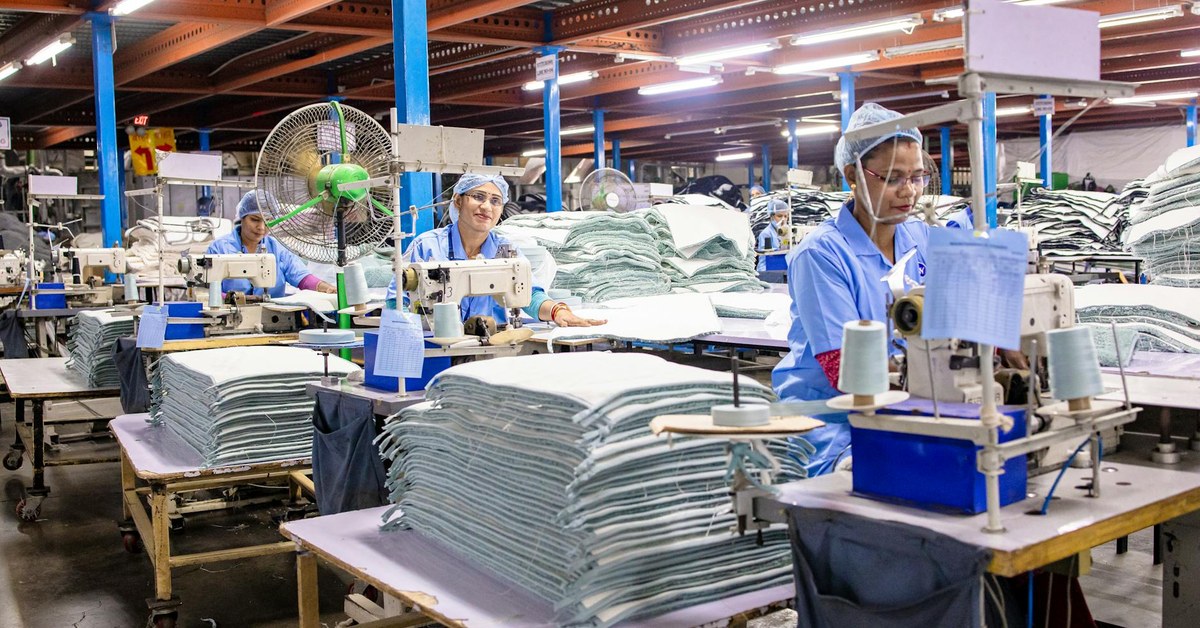

While the core of manufacturing remains tethered to physical production, a strategic, data-driven approach to remote and hybrid working for non-production functions offers significant, quantifiable efficiency gains and competitive advantages for manufacturing companies. The prevailing assumption that the entire manufacturing workforce must be co-located is increasingly obsolete for a substantial portion of roles; indeed, clinging to this outdated model actively impedes talent attraction, operational resilience, and cost optimisation, creating a competitive disadvantage in an evolving global economy. Manufacturing leaders who strategically integrate remote and hybrid models for appropriate roles can enhance productivity, reduce overheads, and strengthen their market position, transforming what appears to be a logistical challenge into a strategic asset.
The Evolving environment of Manufacturing Work
Manufacturing has historically been characterised by its inherent physical presence. Production lines, machinery, and raw materials demand on-site oversight and operation, cementing a perception that the entire sector is resistant to distributed work models. The global shifts accelerated in the early 2020s, however, forced many organisations to reconsider this orthodoxy, even within traditionally place-dependent industries. While a machine operator or assembly line worker cannot perform their duties remotely, a substantial segment of the manufacturing workforce, encompassing roles in research and development, engineering design, supply chain management, sales, finance, human resources, and IT, possesses the inherent capacity for off-site work.
Recent data indicates a significant divergence in remote work adoption across sectors. A 2023 Eurostat report revealed that while 31% of employed persons in the EU usually worked from home, the proportion varied greatly by industry. Information and communication services saw figures exceeding 60%, whereas manufacturing lagged considerably, often below 10% for the entire workforce. Similarly, in the United States, a 2024 survey by the Bureau of Labour Statistics found that only about 9% of manufacturing employees reported working remotely at least some of the time, compared to 40% in finance and insurance. The UK Office for National Statistics reported comparable trends, with manufacturing sectors consistently showing lower rates of remote work compared to professional services.
This disparity highlights not an inability, but often a reluctance or a lack of strategic planning within manufacturing to separate production-critical roles from support and administrative functions. The implications of this lag are significant. As other industries redefine their operational models to attract top talent and optimise costs, manufacturing companies face increasing pressure to justify their adherence to traditional structures. The challenge for manufacturing directors is to dissect their operational structure, identifying roles where physical presence is truly imperative versus those where a distributed model could unlock new efficiencies and competitive advantages without compromising core production outputs.
The traditional manufacturing model, deeply ingrained in organisational culture, often overlooks the potential for efficiency gains outside the direct production process. For instance, a considerable amount of time is spent in meetings, administrative tasks, and collaborative planning that do not require physical proximity to a factory floor. A study published in the Journal of Operations Management in 2023 noted that companies failing to disaggregate their workforce functions strategically experienced higher attrition rates in non-production roles and diminished access to a broader talent pool. This suggests that the resistance to remote and hybrid working in manufacturing companies is not merely a matter of preference, but a strategic oversight with tangible economic consequences.
Beyond the Factory Floor: Identifying Strategic Opportunities for Remote and Hybrid Models
To truly understand the strategic opportunities presented by remote and hybrid working, manufacturing leaders must move past the generalisation that 'manufacturing cannot be remote'. The critical distinction lies between direct production roles, which are inherently site-dependent, and the extensive array of support, planning, and management functions that are not. These non-production roles represent a significant portion of the workforce and, when strategically transitioned to remote or hybrid models, can yield substantial efficiency gains and competitive advantages.
Consider the functions that underpin modern manufacturing:
- Research and Development (R&D) and Product Design: Engineers and designers often spend significant time on conceptualisation, simulation, and data analysis. While prototyping requires physical presence, much of the iterative design process can be executed remotely. A 2022 report by McKinsey & Company indicated that R&D teams with hybrid models reported higher satisfaction and comparable, if not superior, innovation metrics, particularly when supported by advanced collaboration platforms.
- Supply Chain Management and Logistics: These roles involve complex data analysis, forecasting, vendor negotiations, and coordination. Digital tools allow these activities to be performed from any location with internet access. A 2023 study by the Council of Supply Chain Management Professionals noted that companies adopting hybrid models for their supply chain teams experienced a 15% reduction in operational overheads, primarily through optimised travel and facility costs, without compromising supply chain resilience.
- Sales and Customer Service: While factory tours remain important, the majority of sales and customer support interactions now occur digitally. Remote sales teams can cover broader geographies more cost-effectively, reducing travel expenses and increasing response times. UK-based manufacturing firms reported a 20% increase in sales team reach with a 10% reduction in travel budgets after implementing hybrid models in 2023, according to a British Chambers of Commerce survey.
- Information Technology (IT) and Cybersecurity: These functions are inherently location-independent for many roles, particularly software development, network administration, and security monitoring. Distributed IT teams can provide 24/7 support across different time zones, improving operational continuity and response to incidents.
- Finance, Human Resources, and Administration: These corporate functions are prime candidates for remote or hybrid work. Their tasks are largely transactional, analytical, and communication-based, well-suited to digital environments. Cost savings in real estate and utilities can be substantial. For example, a major European automotive manufacturer reported annual savings of approximately €2.5 million (£2.1 million) from reduced office space after transitioning 60% of its administrative staff to a hybrid model.
The efficiency gains extend beyond mere cost reduction. Access to a wider talent pool is a critical strategic advantage. By removing geographical constraints, manufacturing companies can recruit specialists from anywhere in the world, addressing critical skills shortages that are prevalent in many industrial regions. A 2024 Deloitte report on the manufacturing workforce highlighted that 75% of manufacturing executives in the US struggle to find skilled workers, particularly in advanced engineering and IT roles. Embracing remote work can significantly alleviate this challenge, attracting individuals who might otherwise be unavailable due to location preferences or family commitments.
Moreover, employee satisfaction and retention often improve with increased flexibility. A Stanford University study in 2023 found that employees with hybrid work options reported higher job satisfaction and a 13% reduction in turnover rates compared to fully on-site counterparts. For manufacturing, where institutional knowledge is often highly specialised and valuable, retaining experienced non-production staff through flexible working arrangements represents a direct positive impact on organisational efficiency and continuity.
Ultimately, the strategic implementation of remote and hybrid working in manufacturing companies for appropriate roles is not a concession to employee demands, but a deliberate move to optimise resource allocation, enhance talent acquisition, and build a more resilient, agile organisation capable of competing effectively in a globalised market. It is about recognising that operational efficiency in manufacturing now encompasses more than just factory floor productivity; it includes the effectiveness of every support function that keeps the factory running and the business thriving.
What Senior Leaders Get Wrong
Despite the demonstrable benefits, many senior leaders in manufacturing continue to approach remote and hybrid working with a set of misconceptions that undermine effective implementation and limit strategic gains. These errors often stem from an ingrained belief in traditional operational models and a failure to critically analyse the true nature of work within their organisations. Self-diagnosis in this area frequently leads to suboptimal outcomes because it often lacks the objective perspective and comprehensive data analysis required for genuine transformation.
One common mistake is the blanket application or rejection of remote work policies. Leaders often declare either that "everyone must be in the office" or "everyone can work remotely," without a nuanced understanding of functional requirements. This binary thinking ignores the hybrid reality of modern work. For instance, mandating all engineers to be on-site, even for tasks involving only computer-aided design or simulation, introduces unnecessary commute times and reduces individual focus, potentially decreasing overall output. Conversely, allowing a quality assurance manager, whose role requires frequent sampling and physical inspection, to work entirely remotely would be operationally unsound. The failure here is not in the concept of remote work itself, but in the lack of granular analysis of roles, tasks, and interdependencies.
Another critical error is underestimating the importance of digital infrastructure and process re-engineering. Many organisations assume that simply providing laptops and video conferencing software is sufficient for remote operations. This overlooks the need for strong cybersecurity protocols, secure cloud access for sensitive data, enterprise resource planning (ERP) systems accessible remotely, and collaborative platforms designed for distributed teams. A 2023 report by IBM found that 65% of organisations attempting hybrid work without adequate digital transformation experienced significant productivity dips due to technological friction and data security breaches. For manufacturing, where intellectual property and operational data are highly sensitive, inadequate security in remote setups can result in substantial financial and reputational damage, potentially costing millions of dollars in remediation and lost market share.
Furthermore, leaders frequently fail to adapt management styles for distributed teams. Traditional command and control approaches, heavily reliant on physical presence and visible activity, are ineffective in a hybrid environment. Performance management must shift from 'presenteeism' to output and outcomes. Without training for managers on how to set clear objectives, provide asynchronous feedback, and maintain team cohesion across locations, employee engagement suffers. A Gallup study in 2024 indicated that only 3 in 10 managers felt adequately prepared to lead hybrid teams, leading to a 15% drop in team productivity in organisations where management styles were not adapted. This managerial deficit is a significant impediment to realising the efficiency benefits of remote and hybrid working in manufacturing companies.
Finally, a lack of investment in communication strategies and cultural integration is a pervasive issue. When some employees are on-site and others are remote, unintended divides can emerge, leading to feelings of exclusion, reduced collaboration, and a fragmented organisational culture. Leaders often overlook the need for deliberate strategies to bridge these gaps, such as structured virtual team-building activities, transparent communication channels, and equitable access to information and career development opportunities for all employees, regardless of location. Without these measures, the perceived benefits of flexibility can be overshadowed by decreased team cohesion and a decline in overall morale, ultimately impacting productivity and innovation.
Expertise in this domain is crucial because it provides the frameworks and methodologies to conduct a precise, function-by-function analysis of remote work viability, identify technological gaps, develop appropriate management training programmes, and design cultural integration strategies. Relying solely on internal, often biased, perspectives without external validation and best practices risks perpetuating inefficiencies and missing significant opportunities for strategic advancement.
The Strategic Implications of Remote and Hybrid Working in Manufacturing Companies
The adoption of remote and hybrid working models for appropriate functions within manufacturing is not merely an operational adjustment; it is a strategic imperative with profound implications for an organisation's long-term competitiveness, resilience, and market positioning. Manufacturing directors who view this shift through a purely tactical lens, focusing only on immediate cost savings or employee satisfaction, miss the broader strategic advantages that can redefine their position in the global economy.
Firstly, the ability to attract and retain top-tier talent becomes a critical differentiator. As outlined previously, manufacturing faces persistent skills shortages, particularly in highly specialised areas like advanced robotics, data analytics, and artificial intelligence. By offering flexible working arrangements for these roles, companies can tap into a global talent pool, significantly broadening their recruitment reach beyond local geographical limitations. A 2023 report by PwC indicated that 70% of highly skilled professionals consider flexible work options a key factor in job selection. For a manufacturing firm, this translates into access to expertise that might otherwise be unattainable, directly impacting innovation cycles, product quality, and operational optimisation. The cost of replacing a highly skilled employee can range from 100% to 300% of their annual salary, making retention a significant financial and strategic concern. Offering hybrid options can reduce turnover, saving millions of pounds in recruitment and training costs annually for large organisations.
Secondly, operational resilience is significantly enhanced. The events of the early 2020s demonstrated the fragility of highly centralised operational models. When an unexpected event, such as a pandemic, natural disaster, or even localised infrastructure failure, disrupts a physical office location, a workforce tied to that location becomes incapacitated. A distributed workforce, conversely, maintains continuity. If one region is affected, operations can continue from other locations, ensuring critical functions like supply chain coordination, customer service, and financial management remain active. This distributed resilience provides a strong defence against unforeseen disruptions, safeguarding revenue streams and market confidence. For example, a global components manufacturer with hybrid administrative and supply chain teams reported a 95% operational continuity rate during regional power outages, compared to 60% for competitors with fully on-site models.
Thirdly, there are substantial financial implications beyond immediate real estate cost reductions. While reducing office footprint can save a multinational manufacturer millions of pounds or dollars annually in rent, utilities, and maintenance, the deeper financial benefits stem from optimised resource allocation. Capital that would otherwise be tied up in unproductive office space can be redirected towards core manufacturing investments, such as automation, R&D, or sustainable production technologies. A study by Cushman & Wakefield in 2024 projected that companies adopting hybrid models could reduce their commercial real estate portfolios by 15% to 25%, freeing up significant capital for strategic reinvestment. This reallocation directly contributes to strengthening the manufacturing core and driving long-term growth.
Finally, the strategic adoption of remote and hybrid working in manufacturing companies encourage an organisational culture of adaptability and innovation. Organisations that successfully implement distributed models often cultivate a mindset of continuous improvement in their processes, communication, and technology. This culture of agility, born from the necessity of adapting to new work paradigms, spills over into other areas of the business, making the organisation more responsive to market changes, technological advancements, and customer demands. This is not merely about surviving; it is about thriving through proactive adaptation and strategic foresight, positioning the manufacturing firm as a leader rather than a follower in an increasingly dynamic global market.
In conclusion, for manufacturing directors, the decision to embrace or resist remote and hybrid work for non-production functions is a important strategic choice. It impacts not only day-to-day efficiency but also the long-term health, growth, and competitive standing of the enterprise. A considered, data-driven approach, rather than a reactive one, is essential to unlocking these profound strategic advantages.
Key Takeaway
While manufacturing's core production demands on-site presence, strategically integrating remote and hybrid working models for non-production roles offers manufacturing companies significant, quantifiable efficiency gains. This approach enhances talent attraction and retention, builds operational resilience against disruptions, and frees up capital for core investments. Manufacturing directors who adopt a data-driven, nuanced strategy for distributed work will secure a distinct competitive advantage in the global market, moving beyond outdated operational orthodoxies.