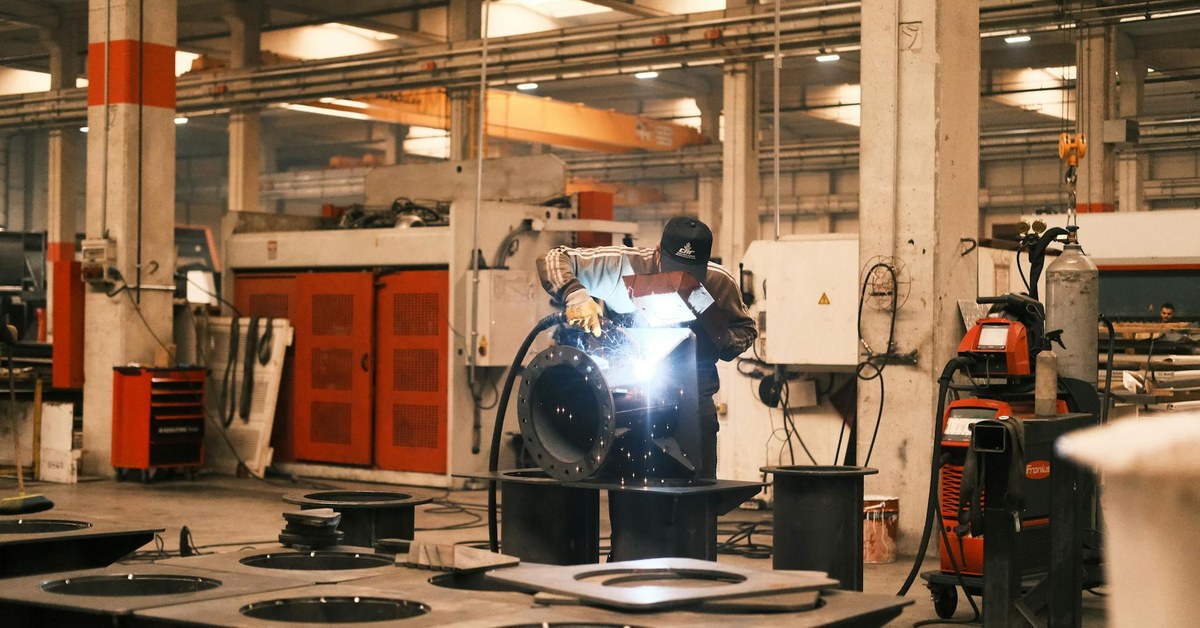

For manufacturing directors, the distinction between thriving and merely surviving often hinges on the quality of their strategic planning. The most successful manufacturing companies do not view strategic planning as an annual exercise in forecasting, but as a continuous, dynamic process intrinsically linked to the strategic allocation of time itself. They understand that time is a finite, non-renewable resource, and its misapplication in planning directly translates into lost market share, diminished innovation capacity, and ultimately, eroded profitability.
The Evolving Imperative for Strategic Planning in Manufacturing Companies
The manufacturing sector stands at a complex juncture. Globalisation, geopolitical shifts, and rapid technological advancements are reshaping operational realities at an unprecedented pace. Manufacturing directors are contending with evolving consumer demands, increased regulatory scrutiny, and the constant pressure to innovate while maintaining cost efficiencies. In this environment, effective strategic planning is not merely advantageous; it is an absolute necessity for survival and growth.
Consider the sheer scale of the manufacturing economy. In the United States, manufacturing contributes approximately 11% to the Gross Domestic Product, generating over $2.9 trillion (£2.3 trillion) annually. Similarly, the United Kingdom's manufacturing sector accounts for about 10% of its GVA, contributing over £200 billion to the economy. Across the European Union, manufacturing represents an even larger share, often exceeding 15% of GDP in many member states, underscoring its foundational role. These figures highlight the immense capital and human resources invested, making strategic foresight paramount.
Technological disruption, often referred to as Industry 4.0, is a prime example of this accelerating change. The adoption of automation, artificial intelligence, and the Internet of Things (IoT) is transforming production lines and supply chains. The International Federation of Robotics reported that global industrial robot sales exceeded 500,000 units in a recent year, with significant uptake across automotive, electronics, and metal industries. While these technologies offer immense potential for efficiency and customisation, their successful integration requires substantial strategic planning, capital investment, and workforce reskilling. A failure to plan for these shifts can leave a company with outdated infrastructure and a workforce ill-equipped for future demands.
Supply chain volatility further complicates matters. A 2023 survey indicated that 70% of companies experienced significant supply chain disruptions in the previous year, ranging from geopolitical conflicts to natural disasters and pandemics. Such disruptions expose weaknesses in static, short-term planning. Manufacturers must develop strategies that build resilience, diversify sourcing, and incorporate advanced analytics for predictive risk management. This demands time for scenario planning, for establishing alternative supplier networks, and for building in flexibility. Without this upfront strategic investment of time, reactive measures become the norm, often at significantly higher costs and with greater operational impact.
Furthermore, the pace of product innovation and market demand is shortening product lifecycles. In some high-tech manufacturing sectors, the average product lifecycle has shrunk from five years to as little as 18 months over the last decade. This compression means that the window for research and development, production optimisation, and market penetration is significantly reduced. Organisations must allocate time strategically to accelerate innovation cycles, anticipate market shifts, and bring new products to market faster than competitors. This is not about simply moving quicker; it is about smarter, more focused allocation of resources and attention.
The increasing emphasis on sustainability and circular economy principles also adds another layer of complexity. Manufacturers are under pressure from consumers, regulators, and investors to reduce their environmental footprint, optimise resource consumption, and develop more sustainable products. This requires long-term strategic planning to redesign processes, invest in green technologies, and establish new supply chain partnerships that align with these objectives. These are not changes that can be implemented overnight; they require years of dedicated strategic effort, planning, and investment. Ultimately, the ability of manufacturing companies to thrive relies heavily on their capacity for dynamic, foresightful, and time-conscious strategic planning.
Why This Matters More Than Leaders Realise
Manufacturing directors frequently operate under immense pressure to deliver immediate results, a focus that can inadvertently overshadow the long-term strategic imperative. The consequences of inadequate strategic planning extend far beyond missed opportunities; they manifest as tangible, often crippling, costs that erode competitive advantage and organisational resilience over time. Many leaders recognise the need for strategy, yet fewer fully comprehend the depth of its impact when neglected, particularly concerning the strategic allocation of time.
One of the most significant hidden costs is the erosion of innovation capacity. When strategic planning is reactive or superficial, organisations become trapped in a cycle of addressing immediate operational issues, leaving little time or resource for exploratory research, product development, or process improvement. Companies that fail to adapt their strategic plans to market shifts often see a 10 to 15% decline in revenue growth over a five-year period compared to their more agile competitors. This is not merely anecdotal; it is a consistent pattern observed across multiple industries. Without a clear strategic direction, R&D efforts can become fragmented, leading to wasted investment in projects that do not align with future market needs or technological trajectories. For example, the US manufacturing sector invests over $300 billion (£240 billion) annually in R&D; a substantial portion of this capital can be misdirected without strong strategic planning guiding its allocation.
Inefficient capital expenditure is another critical consequence. Major investments in machinery, facilities, or new production lines require significant foresight. A strategic plan that does not accurately anticipate future market demand, technological advancements, or regulatory changes can lead to investments in outdated equipment or capacity that quickly becomes redundant. This results in stranded assets, increased operational costs, and a competitive disadvantage. Consider a scenario where a manufacturer invests heavily in a specific production technology, only for a disruptive alternative to emerge within a year or two. Without strategic planning that incorporates scenario analysis and technological forecasting, such investments become liabilities rather than assets.
The impact on market share and profitability is direct and profound. Competitors who dedicate time to sophisticated strategic planning are better positioned to identify emerging markets, develop innovative products, and optimise their supply chains. This allows them to capture market share from less strategically astute firms. For instance, a European study found that manufacturers with highly effective strategic planning are 2.5 times more likely to outperform their peers in profitability. This outperformance stems from their ability to make timely decisions, allocate resources optimally, and respond proactively to market dynamics, all of which are functions of well-executed strategic time management.
Furthermore, inadequate strategic planning can lead to significant talent drain. Highly skilled engineers, production managers, and researchers are often motivated by a clear vision, challenging projects, and opportunities for growth. When an organisation lacks a coherent strategic direction, these individuals can become disengaged, seeing their efforts as disconnected from a larger purpose. This can result in higher employee turnover, increased recruitment costs, and a loss of institutional knowledge. The time spent on recruitment and training for replacements, often at a cost equivalent to 6 to 9 months of an employee's salary, represents a substantial, avoidable expense stemming from a lack of strategic clarity.
Finally, the long-term resilience of the organisation is compromised. Without a strategic framework that accounts for potential disruptions, whether economic downturns, geopolitical tensions, or unforeseen technological shifts, a manufacturing company becomes inherently fragile. The reactive scramble during a crisis consumes vast amounts of time and resources that could have been better spent on proactive measures. Studies suggest that 50% to 70% of strategic initiatives fail to deliver their intended value, often due to poor planning and execution, underscoring the critical need for a more deliberate and time-conscious approach to strategy development and implementation.
What Senior Leaders Get Wrong
Even the most experienced manufacturing directors, operating in highly competitive environments, can fall prey to common pitfalls in strategic planning. These errors are not typically due to a lack of intelligence or dedication, but rather stem from ingrained organisational habits, cognitive biases, and an underestimation of the critical role time plays in shaping strategic outcomes. Identifying these common missteps is the first step towards cultivating a more effective and resilient strategic approach.
One prevalent mistake is short-termism. Many leaders are understandably focused on quarterly results, shareholder expectations, and immediate operational challenges. This short-term perspective often leads to strategic plans that are little more than annual budgets or operational forecasts, lacking a genuine long-term vision. While quarterly performance is important, an overemphasis can divert resources and attention away from investments in future capabilities, research and development, or market diversification that may not yield immediate returns but are crucial for sustained growth. US executives, for instance, report spending less than 10% of their time on strategic thinking, with the majority consumed by operational issues, a clear indicator of this imbalance.
Another significant error is siloed planning. In large manufacturing organisations, different departments or business units often develop their strategies in isolation. Production, sales, R&D, and supply chain teams may optimise for their own metrics without fully integrating their plans with the broader organisational strategy. This creates internal inefficiencies, conflicting priorities, and a fragmented approach to market opportunities. For example, a production team might invest in capacity expansion without fully understanding the sales team's forecast for a specific product line, leading to overproduction or missed market demand. A study of EU manufacturers found that only 35% felt their strategic planning process adequately addressed cross-functional integration and future market volatility, highlighting a widespread issue.
Over-reliance on historical data is a deceptive trap. While past performance provides valuable context, basing future strategy solely on historical trends in a rapidly changing world can be perilous. Disruptive technologies, shifting consumer preferences, and unforeseen global events can render historical models obsolete. Effective strategic planning requires forward-looking analysis, scenario planning, and an openness to weak signals that indicate future shifts. Leaders sometimes cling to what has worked in the past, failing to allocate sufficient time to anticipate potential disruptions or emerging opportunities that do not fit neatly into historical patterns.
A lack of agility in strategic plans is another common failing. Many organisations develop rigid, five-year plans that are treated as immutable blueprints. However, the dynamic nature of manufacturing markets demands flexibility. A strategy should be a living document, subject to regular review, adaptation, and even fundamental shifts in response to new information or changing circumstances. The time allocated to strategic review must be regular and meaningful, not a perfunctory annual check-in. Without this built-in adaptability, strategic plans quickly become irrelevant, hindering rather than guiding decision-making.
Furthermore, many senior leaders underestimate or under-resource the strategic planning process itself. Treating strategic planning as an administrative overhead rather than a critical investment is a fundamental miscalculation. This often results in insufficient time being allocated to strong data gathering, competitive analysis, stakeholder engagement, and critical thinking. The absence of dedicated strategic time means that planning is often rushed, based on incomplete information, or delegated to junior staff without sufficient senior leadership engagement. This leads to superficial plans that lack depth, buy-in, and ultimately, impact.
Finally, confirmation bias can significantly impair strategic decision-making. Leaders, like all individuals, can be prone to seeking out and interpreting information in a way that confirms their pre-existing beliefs or preferred courses of action. This can lead to overlooking critical data, dismissing dissenting opinions, or failing to challenge assumptions that are no longer valid. Overcoming this requires a deliberate commitment to diverse perspectives, critical challenge sessions, and a culture that encourages open debate and intellectual honesty within the strategic planning process.
Reclaiming Strategic Time for Future-Proof Manufacturing
The path to sustained success for manufacturing companies lies in a fundamental re-evaluation of how strategic planning is conceived and executed, with a particular emphasis on the deliberate management of organisational time. Moving beyond the pitfalls discussed, leaders must cultivate a strategic approach that is dynamic, data-driven, and deeply integrated into the fabric of the business. This is about more than just having a plan; it is about building the organisational capability for continuous strategic adaptation.
Effective strategic planning in manufacturing companies demands a shift towards dynamic planning cycles. Instead of rigid, multi-year plans reviewed annually, organisations should adopt shorter feedback loops and more frequent strategic reviews. This might involve quarterly strategic alignment meetings, monthly performance deep dives, or even weekly updates on key strategic indicators. This approach allows for quicker adjustments in response to market shifts, technological advancements, or operational challenges. Companies that regularly review and adapt their strategic plans outperform those with static plans by an average of 15% in profitability over a decade, demonstrating the tangible benefits of agility.
Central to this dynamic approach is strong scenario planning. In an unpredictable global environment, relying on a single future projection is inherently risky. Manufacturing leaders must dedicate time to developing multiple plausible scenarios for the future of their industry, markets, and supply chains. This involves identifying key uncertainties, understanding their potential impact, and developing contingent strategies for each scenario. Such foresight allows companies to build resilience, identify early warning signals, and respond proactively rather than reactively when disruptions occur. This strategic investment of time in foresight is a powerful differentiator.
Cross-functional collaboration is non-negotiable for future-proof manufacturing. Breaking down silos ensures that strategic plans are comprehensive, internally consistent, and executable. This means involving representatives from R&D, production, supply chain, sales, marketing, and finance throughout the planning process. Regular inter-departmental workshops, shared strategic objectives, and transparent communication channels can align efforts and prevent conflicting priorities. When all parts of the organisation are strategically aligned, the collective time and resources are far more effectively deployed towards common goals.
Investment in advanced data analytics and artificial intelligence is also critical. Modern manufacturing generates vast amounts of data, from production line performance to supply chain logistics and customer demand patterns. use this data with predictive analytics tools can provide invaluable insights for strategic decision-making, moving beyond descriptive reporting to prescriptive guidance. This means allocating time and resources to develop the data infrastructure, analytical capabilities, and data literacy within the organisation. Firms embracing digital transformation in their operations and strategic processes report efficiency gains of 20% to 30%, underscoring the power of data-driven strategy.
Finally, and perhaps most importantly, leadership commitment to strategic time is paramount. Strategic planning should not be viewed as an activity that happens once a year or is delegated away. Senior leaders must actively participate, champion the process, and visibly allocate dedicated time for strategic thinking, debate, and decision-making. This sets the tone for the entire organisation, reinforcing the message that strategic foresight is a core leadership responsibility, not a peripheral task. A significant portion of manufacturing leaders, around 60%, recognise the need for greater agility in their strategic planning processes; turning this recognition into dedicated action is the next step.
By integrating these elements, manufacturing companies can transform their strategic planning from a static exercise into a continuous strategic capability. This enables them to not only react to change but to anticipate it, shape it, and ultimately, thrive in an increasingly complex and competitive global marketplace. The strategic allocation of time becomes the ultimate competitive advantage.
Key Takeaway
Effective strategic planning in manufacturing companies is not merely about setting goals; it is about the deliberate, disciplined management of organisational time as a strategic asset. Leaders who integrate foresight, agility, and cross-functional collaboration into their planning cycles are better positioned to manage market volatility, capitalise on technological advancements, and secure enduring competitive advantage. Prioritising strategic time enables manufacturers to move beyond reactive operations towards proactive, sustainable growth.