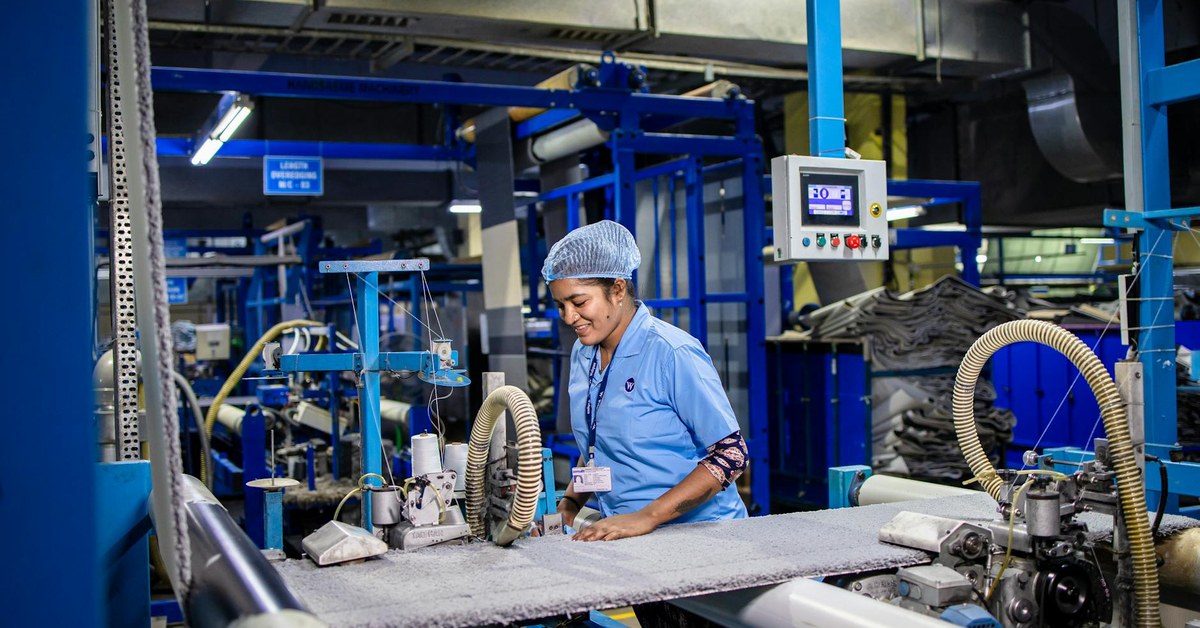

For many food and beverage manufacturers, the pursuit of technological advancement has become an exercise in self-deception; rather than delivering promised efficiencies, a significant proportion of new systems and digital solutions merely layer complexity onto already intricate operations, diverting capital and attention from fundamental improvements that truly drive competitive advantage. This uncritical approach to technology adoption in food and beverage manufacturers often results in a costly operational burden, rather than the strategic uplift leaders anticipate.
The Illusion of Progress: examine Technology Adoption in Food and Beverage Manufacturers
Are you truly gaining efficiency, or are you simply acquiring more sophisticated problems? This is a question far too few food business directors ask with sufficient rigour when contemplating new technology investments. The prevailing narrative suggests that technological advancement is inherently good, that investing in the latest digital tools or automation will automatically translate into improved productivity, reduced costs, and enhanced competitiveness. Experience, however, tells a different story, one often characterised by disillusionment and unfulfilled promises.
Consider the broader context of digital transformation projects. Research from McKinsey & Company indicates that approximately 70 percent of all digital transformations fail to achieve their stated objectives. While this figure encompasses various industries, manufacturing, with its complex legacy systems and operational intricacies, is particularly susceptible. In the food and beverage sector specifically, the drive to modernise often collides with stringent regulatory requirements, perishable goods, and highly variable supply chains, exacerbating the challenges of integrating new technologies effectively.
Globally, the food processing equipment market is projected to reach over $70 billion (£55 billion) by the end of the decade, reflecting substantial capital expenditure in hardware alone. When software, integration services, and training are added, the total investment is staggering. Yet, despite this massive outlay, productivity growth in many parts of the food and beverage manufacturing sector lags behind other industries. For example, data from Eurostat shows that while manufacturing productivity across the EU has seen steady, albeit modest, growth, specific segments within food manufacturing sometimes struggle to translate technology investment into proportional output gains.
In the United States, the average return on investment for many industrial automation projects can be difficult to quantify beyond initial labour cost reductions, often failing to account for the full lifecycle costs of technology. Similarly, in the UK, reports from organisations like the Food and Drink Federation highlight ongoing productivity challenges within the sector, suggesting that while investment in technology is present, its strategic impact is frequently diluted by poor implementation or a lack of alignment with core business processes. The assumption that new technology is inherently better, or that it will automatically solve existing operational friction points, is a dangerous fallacy. Instead, it frequently acts as an accelerant for existing inefficiencies, layering digital complexity onto analogue disorder.
The sheer volume of available technology, from advanced robotics to cloud based ERP systems and artificial intelligence powered analytics platforms, creates a pervasive ‘fear of missing out’ among leaders. This pressure can drive impulsive decisions, where technology is acquired because competitors are adopting similar solutions, rather than because it addresses a clearly defined, strategic business problem. This uncritical approach to technology adoption in food and beverage manufacturers represents a significant drain on capital and human resources, diverting attention from the fundamental process improvements that deliver genuine, sustainable competitive advantage.
Many organisations find themselves locked into vendor ecosystems, unable to easily switch or integrate other solutions without incurring prohibitive costs. This vendor lock in can stifle innovation and prevent manufacturers from adopting more suitable technologies that emerge later. The result is often an expensive, convoluted technology stack that performs suboptimally, requiring constant maintenance and patching, rather than a streamlined operation. This is not progress; it is a costly detour.
The Hidden Costs of Uncritical Integration: Why More is Not Always Better
Have you truly accounted for the comprehensive cost of your proposed 'solution', or have you merely fixated on the initial purchase price? This question exposes one of the most significant oversights in technology adoption within food and beverage manufacturing. The capital expenditure for new software or machinery is, in reality, a fraction of the true cost. What often goes unexamined are the profound, long term implications of integrating these systems into an already complex operational environment.
The concept of 'integration debt' is particularly pertinent here. Many manufacturers operate with a patchwork of legacy systems, each designed for a specific function and rarely built to communicate smoothly with others. Introducing new technology into this environment often necessitates custom integrations, expensive middleware, or, more commonly, manual data transfer processes. This creates data silos and introduces new points of failure. A study by the Capgemini Research Institute found that companies spend, on average, 10 to 15 percent of their total IT budget on integration, with many manufacturing firms reporting even higher figures due to the bespoke nature of their operations. This expenditure is not on innovation, but on making disparate systems merely coexist.
Beyond the technical integration, there is the substantial burden of training. Every new system requires staff to learn new workflows, interfaces, and protocols. This is not a one off event; it is an ongoing process, particularly in an industry with high staff turnover. Training costs, both direct and indirect due to lost production time, can significantly erode the anticipated benefits of a new system. Furthermore, poorly designed or difficult to use systems lead to frustration, reduced employee morale, and ultimately, lower adoption rates, rendering the technology investment largely ineffective. Research from Deloitte suggests that employee resistance to change is a primary reason for the failure of digital transformation initiatives in a significant number of cases.
Then there are the long term costs of maintenance and obsolescence. Technology evolves at a relentless pace. What is advanced today can be outdated in five to ten years. Manufacturers must account for ongoing licensing fees, software updates, security patches, and the eventual need for replacement. These recurring costs can quickly outweigh the initial investment, especially if the chosen system lacks flexibility or vendor support wanes over time. The average lifespan of a manufacturing execution system, for example, is often cited as 10 to 15 years, but the cost of keeping it current and integrated can be substantial over that period, potentially reaching 100 percent of the original software cost every five years.
Operational disruption during implementation is another frequently underestimated cost. Deploying a new ERP system or automating a production line is rarely a smooth process. There are inevitable periods of downtime, debugging, and user adoption challenges, all of which impact production schedules, output volumes, and delivery commitments. A survey by a leading consulting firm indicated that over 60 percent of manufacturing firms experienced significant production disruptions during major technology implementations, with an average downtime of several days to weeks, translating into millions of dollars in lost revenue for larger operations.
Perhaps the most insidious hidden cost is the opportunity cost. Resources, both financial and human, allocated to managing complex, underperforming systems are resources that cannot be invested in genuine process re engineering, talent development, or core research and development. This misdirection of effort can stifle true innovation and prevent the organisation from addressing its most pressing strategic challenges. The uncritical pursuit of technology adoption in food and beverage manufacturers, therefore, risks not only financial losses but also a stagnation of strategic progress, leaving companies vulnerable to more agile and discerning competitors.
For instance, an EU based dairy producer might invest heavily in a new traceability system, expecting to streamline compliance and recall processes. However, if the system is not properly integrated with existing inventory management and production scheduling platforms, it might require extensive manual data entry, creating new bottlenecks and increasing the risk of human error. The perceived benefit of enhanced traceability is then undermined by the added operational complexity and the ongoing cost of managing disconnected data points, ultimately failing to deliver the anticipated efficiency or strategic advantage.
Beyond the Hype: Identifying True Value in Food Production Technology
Are you buying a shiny object, or are you genuinely solving a critical problem? The distinction is paramount for food business directors grappling with technology investment decisions. True efficiency in food production technology stems from targeted, well understood applications that address specific, measurable bottlenecks, rather than from broad, aspirational 'digital transformations' that lack a clear problem statement.
Consider the categories of technology that, when applied judiciously, demonstrably reduce complexity and enhance efficiency:
Advanced Manufacturing Execution Systems (MES) and Enterprise Resource Planning (ERP): While these are foundational, their value lies not in their mere presence, but in their precise configuration and integration. When implemented with rigorous process mapping and a deep understanding of operational workflows, a well selected MES can streamline production scheduling, inventory management, quality assurance, and regulatory compliance. For example, a global food ingredients manufacturer reported a 15 percent reduction in production cycle times and a 10 percent decrease in material waste after optimising their MES to better reflect real time plant floor conditions, rather than simply replacing an older system with a newer version. The key was the pre implementation process re engineering, not just the software upgrade.
Predictive Analytics: This is where data moves beyond descriptive reporting to proactive insight. By analysing sensor data from machinery, historical production runs, and supply chain information, predictive models can significantly reduce waste, optimise energy consumption, and forecast demand with greater accuracy. For instance, using sensor data to predict equipment failure can reduce unplanned downtime by 10 to 20 percent, as evidenced in industrial sectors globally. A US based bakery chain, for example, implemented a predictive analytics system that monitored oven temperatures, humidity levels, and ingredient consistency, leading to a 7 percent reduction in product rejects and a 5 percent saving in energy costs due to optimised baking cycles. This was not about collecting more data, but about extracting actionable insights from existing data streams.
Automation and Robotics: When strategically deployed, automation can dramatically improve safety, reduce human error, and handle repetitive, labour intensive tasks, freeing human capital for higher value work. In the food sector, robotics are increasingly adopted for tasks such as picking and packing, quality inspection, and even complex assembly in ready meal production. The International Federation of Robotics (IFR) reported a significant increase in robot installations in the food and beverage industry globally, with annual growth rates often exceeding 10 percent in recent years. A European meat processing plant, for example, introduced robotic cutting and sorting systems, not only improving product consistency and yield by 8 percent but also enhancing worker safety by reducing exposure to hazardous tasks. This was a targeted application to a specific problem: consistent quality and worker safety in a high volume, high risk environment.
Supply Chain Visibility and Traceability Solutions: Technologies that offer real time tracking and transparency across the entire supply chain are invaluable, particularly in a sector defined by perishable goods and complex global networks. These systems, when properly integrated, can reduce delays, improve responsiveness to disruptions, and bolster food safety. During recent global supply chain disruptions, companies with superior end to end visibility performed demonstrably more robustly, experiencing fewer stockouts and maintaining better customer service levels. A UK based beverage company implemented a blockchain enabled traceability system for its raw ingredients, which not only met new regulatory requirements but also reduced the time to pinpoint the source of a potential contamination issue from days to mere hours, protecting brand reputation and public health.
The common thread among these examples of successful technology adoption in food and beverage manufacturers is a clear articulation of the problem being solved, a rigorous assessment of the value proposition, and a commitment to integrating the technology smoothly into optimised existing processes. The focus is on simplification and enhancement, not merely on adding another layer of digital infrastructure. Leaders must challenge vendors and internal teams to demonstrate tangible, quantifiable benefits that genuinely contribute to the bottom line and operational resilience, rather than succumbing to the allure of technological novelty.
Reclaiming Control: A Strategic Approach to Technology Adoption for Food Business Directors
Who is truly dictating your technology strategy: your organisation's intrinsic needs, or a vendor's compelling sales pitch? This provocative question lies at the heart of effective technology adoption in food and beverage manufacturers. For too long, many food business directors have ceded strategic control, allowing technological trends or vendor influence to shape their investment decisions. It is time to reclaim that control by instilling a culture of critical inquiry and strategic alignment, moving beyond reactive or trend driven purchasing.
A disciplined approach begins with a fundamental shift in perspective:
Define the Problem First, Always: Technology is a means to an end, not an end in itself. Before considering any new system or solution, leaders must articulate the specific operational bottleneck, cost centre, market demand, or regulatory challenge that the technology is intended to address. What precisely is the pain point? What specific outcome is desired? Without a clear problem statement, any technology solution is a shot in the dark, likely to create more issues than it solves. For example, if the problem is excessive product spoilage, the solution might be improved cold chain monitoring, not a new HR system.
Demand Rigorous, Comprehensive ROI Calculation: Insist on a thorough financial model that accounts for all costs, not just the initial purchase. This must include integration expenses, ongoing maintenance, training, potential operational disruptions, and the often overlooked opportunity costs. Challenge vendor promises with realistic, internally verifiable data. A realistic ROI calculation for a new automated packaging line, for instance, must factor in not only the cost of the robots but also the engineering required for integration, the training for operators and maintenance staff, the energy consumption, and the expected lifespan of the equipment, against the projected savings in labour and increased throughput.
Optimise Processes Before Technology: This is perhaps the most critical, yet frequently ignored, principle. Technology applied to a broken, inefficient process merely automates and amplifies the brokenness. Before investing in any new system, scrutinise and streamline existing workflows. Identify redundancies, eliminate unnecessary steps, and standardise procedures. Only then will technology have a fertile ground to deliver genuine efficiency gains. A study by Accenture highlighted that organisations that re engineered their core processes before implementing new ERP systems achieved, on average, 20 percent higher efficiency gains than those that did not.
Embrace a Pilot and Scale Approach: Avoid the temptation for 'big bang' implementations. Instead, advocate for phased deployment, starting with pilot projects to test efficacy, iron out integration issues, and gather user feedback on a smaller, contained scale. This iterative approach allows for adjustments and refinements before a wider rollout, significantly reducing risks and increasing the likelihood of successful adoption. A large food manufacturer in the EU successfully piloted a new AI driven quality inspection system on a single production line for six months, using the learnings to refine the system and training protocols before deploying it across multiple plants, thereby mitigating widespread disruption.
Assess Organisational Readiness and encourage a Culture of Change: Technology adoption is as much about people as it is about machines or software. Evaluate the internal capabilities of your workforce. Is there sufficient technical expertise to manage the new systems? Is the organisational culture prepared for the change? Leadership must actively champion the new technology, communicate its benefits clearly, and provide adequate support and training to ensure widespread buy in. Research consistently shows that a significant percentage of technology project failures are attributable to poor change management and a lack of user adoption. Investing in change management strategies, including clear communication plans and strong training programmes, can substantially increase the success rate of technology initiatives.
Ultimately, reclaiming control over technology strategy means food business directors must become discerning arbiters, asking uncomfortable questions and demanding tangible value. It means resisting the pressure to adopt every new trend and instead focusing on solutions that genuinely simplify operations, enhance decision making, and provide a clear competitive edge. The goal is not merely to acquire technology, but to strategically deploy it as a catalyst for genuine, measurable improvement, ensuring that every investment contributes to a more efficient, resilient, and profitable manufacturing enterprise. This strategic rigour in technology adoption in food and beverage manufacturers is no longer optional; it is a prerequisite for survival and growth.
Key Takeaway
Many food and beverage manufacturers mistakenly equate technology acquisition with progress, often layering complex systems onto operations without a clear strategic imperative, resulting in increased costs and operational friction. True efficiency and competitive advantage stem from a disciplined approach to technology adoption, one that prioritises solving defined business problems, rigorously calculates comprehensive ROI, and optimises underlying processes before introducing new solutions. Leaders must challenge assumptions, demand tangible value, and encourage a culture of critical evaluation to ensure technology genuinely simplifies, rather than complicates, their manufacturing enterprises.