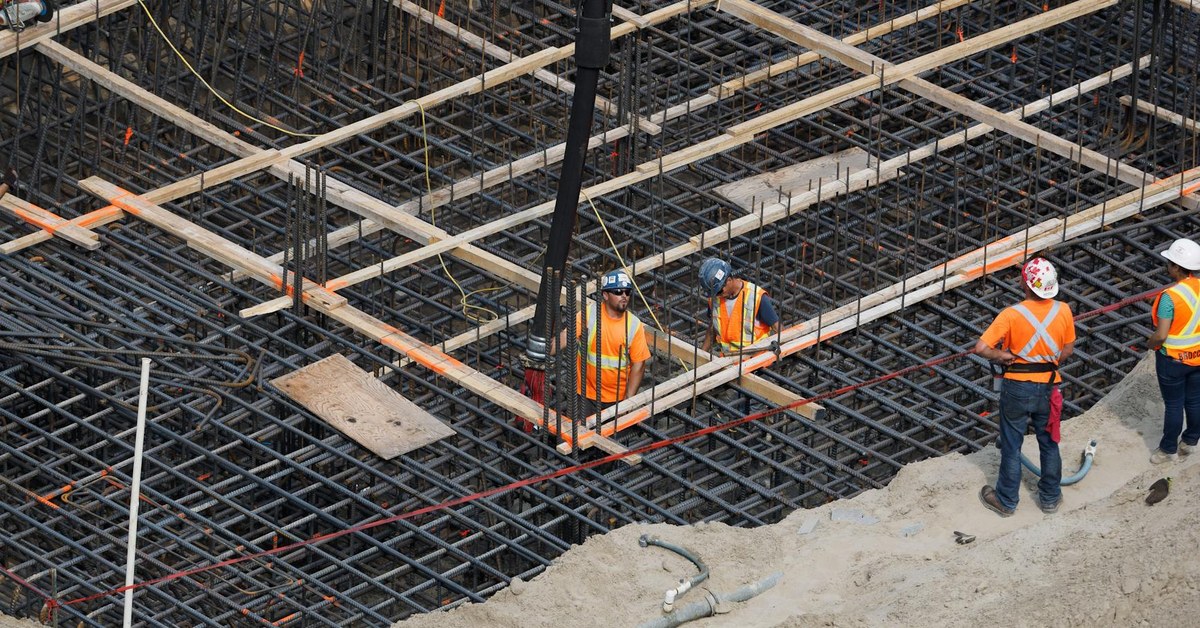

A 60-minute meeting involving a senior leader rarely costs just one hour of their salary. The actual expenditure is exponentially higher when factoring in preparation, travel, the cognitive load of context switching, and the subsequent recovery time required for deep work. This unseen burden represents a significant, often unacknowledged, drain on organisational resources and strategic capacity, fundamentally altering the perceived cost of one hour meeting for an executive.
The Invisible Ledger: Beyond Basic Salary Calculations for Executive Meetings
For many organisations, the calculation of meeting costs begins and ends with a simple equation: the sum of attendees' hourly salaries multiplied by the meeting duration. This approach is not merely insufficient; it is a profound miscalculation that obscures the true financial and strategic implications of executive time. While direct salary costs are tangible, they represent only a fraction of the actual expenditure. The larger, more insidious costs remain hidden, eroding productivity and competitive advantage without ever appearing on a balance sheet.
Consider the typical executive's schedule. A 2017 Korn Ferry study indicated that senior executives spend upwards of 60% of their working hours in meetings. More recently, a 2022 survey from the US Bureau of Labor Statistics suggested that managers dedicate over half their workday to scheduled collaborations. In the UK, the Chartered Management Institute reported that managers spend an average of 16 hours weekly in meetings. These figures paint a stark picture: meetings are not an occasional occurrence, but a dominant feature of the leadership experience.
Let us anchor this discussion with concrete salary figures. A senior executive in the United States, earning a base salary of $500,000 per annum, commands an hourly rate of approximately $240, assuming a 2080-hour working year. In the United Kingdom, a comparable executive on a £400,000 salary translates to an hourly rate of roughly £192. Across the Eurozone, for instance in Germany or France, an executive earning €450,000 per year would cost approximately €216 per hour. If a 60-minute meeting involves five such executives, the direct salary cost alone quickly escalates to over $1,200 (£960, €1,080) per hour. This sum, while substantial, is merely the tip of the iceberg.
The conventional view fails to account for the indirect costs that accumulate around every scheduled interaction. These include the time spent preparing for the meeting, the actual or virtual travel required, the cognitive toll of shifting focus from one task to another, and the subsequent period needed to regain concentration. Each of these elements adds considerable, unmeasured expense to the cost of one hour meeting for an executive, transforming a seemingly contained event into a protracted drain on resources. Organisations that neglect these hidden dimensions are operating with a dangerously incomplete understanding of their operational economics.
A more rigorous analysis demands that we look beyond the clock time of the meeting itself and consider the entire lifecycle of an executive's engagement with it. This comprehensive view reveals that a single hour on a calendar can, in reality, consume several hours of an executive's most valuable resource: their focused attention and strategic capacity. This is not merely an issue of personal productivity; it is a fundamental challenge to organisational efficiency and the effective deployment of leadership talent.
The Multiplier Effect: Quantifying Hidden Time Sinks in Executive Engagements
The true cost of one hour meeting for an executive is significantly inflated by a series of hidden time sinks that precede, surround, and follow the scheduled event. These factors, often dismissed as unavoidable overheads, collectively exert a multiplier effect on the direct salary cost, transforming a 60-minute slot into a multi-hour commitment. Understanding and quantifying these elements is crucial for any organisation seeking to optimise its leadership time.
Preparation: The Unseen Antecedent
Before an executive even steps into a meeting room, or clicks a virtual link, a considerable amount of preparation often occurs. This can involve reviewing documents, analysing reports, formulating arguments, or coordinating with team members. For a critical strategic discussion, this preparation can easily consume 30 minutes to two hours for each executive. A 2023 Harvard Business Review study found that knowledge workers spend an average of four hours per week preparing for meetings. For senior leaders, whose input is expected to be incisive and well-informed, this investment is often higher, particularly for high-stakes decisions or board-level discussions.
Using our earlier example of a US executive earning $500,000 annually, equating to $240 per hour, if they spend one hour preparing for a 60-minute meeting, an additional $240 is immediately added to the cost. For a UK executive at £192 per hour, this is an extra £192. For an EU executive at €216 per hour, an additional €216. This preparatory phase is rarely accounted for in meeting cost analyses, yet it is a direct and necessary expenditure of executive time.
Travel: More Than Just Physical Distance
Physical travel to an in-person meeting location, particularly for executives who might commute between different offices or even cities, presents an obvious cost in terms of time and expenses. However, even in an increasingly remote or hybrid work environment, 'virtual travel' is a factor. This includes the time spent logging into conferencing software, ensuring technical functionality, locating relevant digital documents, and troubleshooting minor glitches. While often just a few minutes, these small increments add up. If an executive spends 15 minutes navigating these logistical elements for each meeting, that is 15 minutes of productive time lost, carrying a financial value of approximately $60 (£48, €54) per meeting for our hypothetical executive.
Context Switching: The Cognitive Tax
Perhaps the most insidious and underestimated cost is that of context switching. Executives are typically engaged in complex, cognitively demanding strategic work. Shifting from such deep work to a meeting, and then back again, incurs a significant cognitive tax. Research by the American Psychological Association indicates that even brief interruptions can significantly increase error rates and reduce overall productivity by as much as 40%. A landmark study from the University of California, Irvine, revealed that it takes an average of 23 minutes and 15 seconds for an individual to return to their original task with full focus after an interruption.
Consider the implications for an executive. Before a meeting, they must disengage from their current high-value task, mentally prepare for the meeting's subject matter, and transition their cognitive framework. After the meeting, they must then reverse this process, re-establishing their focus on their previous work or shifting to a new deep task. If we conservatively estimate 20 minutes of lost productivity before the meeting and another 20 minutes after due to context switching, this amounts to 40 minutes of unproductive time associated with a single 60-minute meeting. For our $240 per hour US executive, this represents an additional $160 (£128, €144) in lost productive capacity per meeting.
Recovery: Reclaiming Focus
Beyond the immediate context switch, there is a recovery period. Meetings, particularly those involving intense discussion, negotiation, or problem-solving, can be mentally exhausting. Executives often require time to decompress, process information, and mentally prepare to re-engage with demanding tasks that require sustained concentration. This recovery time, distinct from the immediate context switch, is essential for maintaining high-quality output and avoiding decision fatigue. If an executive needs 30 minutes to fully recover and re-enter a flow state for deep work after a challenging 60-minute meeting, this adds another $120 (£96, €108) to the total cost.
Let us aggregate these hidden costs for a single 60-minute meeting involving one senior US executive earning $500,000 per year:
- Direct meeting time (60 minutes): $240
- Preparation (conservative 60 minutes): $240
- Context switching (40 minutes total): $160
- Recovery/Decompression (30 minutes): $120
- Total Estimated Cost: $760
This conservative calculation reveals that a "60-minute" meeting, when all its associated activities are considered, effectively consumes approximately 3 hours and 10 minutes of an executive's time, costing over three times their direct hourly rate. When multiple executives attend, these costs multiply dramatically, transforming seemingly benign calendar entries into significant drains on organisational capital and strategic bandwidth. The failure to accurately quantify these hidden time sinks represents a critical blind spot in many leadership teams' operational understanding.
The Eroding Edge: What Senior Leaders Get Wrong About Meeting Efficiency
The consistent underestimation of meeting costs by senior leaders is not merely an oversight; it is a systemic flaw rooted in deeply ingrained habits, psychological biases, and a fundamental misunderstanding of time as a strategic asset. This lack of rigorous scrutiny erodes an organisation's competitive edge, stifling innovation and delaying critical decisions. Challenging these assumptions is uncomfortable, yet necessary for genuine progress.
The Myth of Indispensability and Habitual Attendance
One of the most pervasive errors is the belief that a senior leader's presence is always essential, regardless of the meeting's true purpose or the leader's actual contribution. This often stems from a combination of factors: a desire to be seen as engaged, a fear of missing out on crucial information (FOMO), or simply an adherence to established cultural norms. "We have always had the CEO in this weekly update" becomes a self-perpetuating cycle, even when the information could be disseminated more efficiently through a concise report or a delegated representative.
Leaders often deceive themselves into believing that their mere presence provides value, overlooking the fact that passive attendance still incurs the full spectrum of direct and indirect costs. This habitual attendance, often without a clear, pre-defined role or expected outcome, transforms executive time from a precious resource into a default commodity.
Lack of Rigorous Cost Accounting and Intangible Value
Organisations excel at measuring tangible costs: salaries, office space, software licenses. Yet, the cost of executive time, particularly the hidden components, remains largely unquantified. Because these costs do not appear as line items on a profit and loss statement, they are dismissed as 'soft' or 'intangible'. This failure to attribute a concrete financial value to time spent in meetings means there is little incentive to optimise it. If a meeting's true cost, including all hidden factors, were explicitly charged back to the initiating department or project, the incentive structure would fundamentally shift, driving greater accountability and efficiency.
Consider the opportunity cost: what strategic initiative, what innovation, what critical market analysis is being delayed or neglected because an executive is spending three hours on a
Find your hidden hours
A conversation with Clara, our AI adviser, followed by a personalised report and one-to-one debrief. If we can’t find at least 5 recoverable hours, you pay nothing.
Keep reading
More from this topic