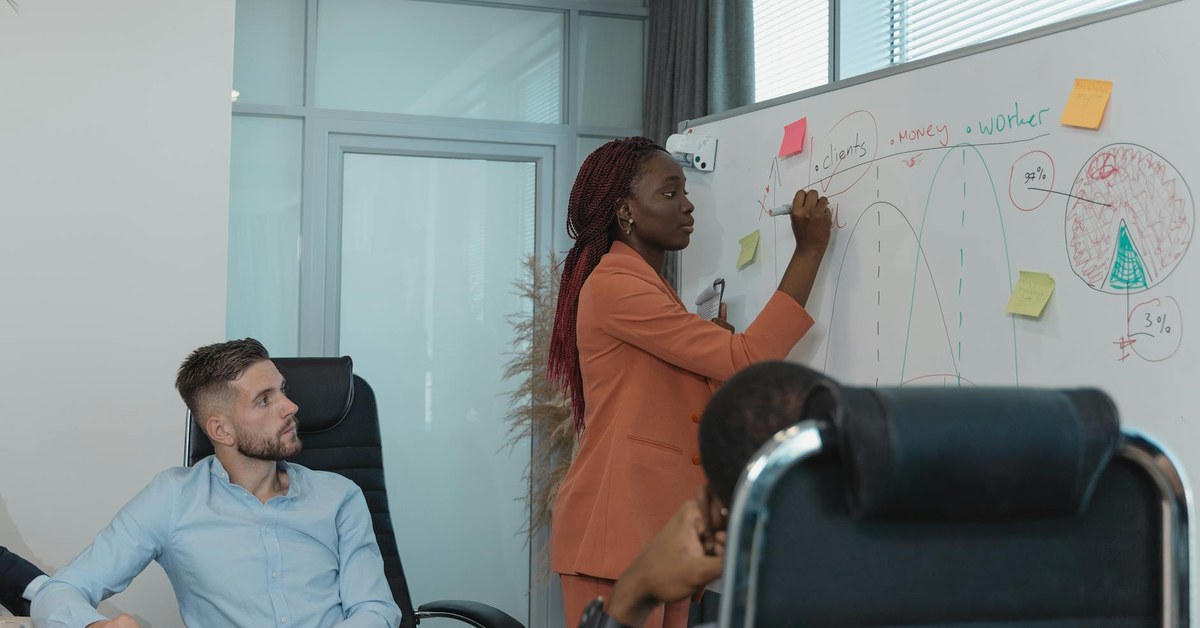

The pervasive condition of the time poor CEO is not a badge of honour, nor is it an inevitable consequence of senior leadership; it is a critical strategic vulnerability that undermines organisational resilience, stifles innovation, and compromises long-term value creation, demanding immediate, systemic re-evaluation rather than merely personal efficiency adjustments. This chronic state, often viewed internally as a sign of dedication or indispensability, in fact signals a profound misallocation of the organisation's most critical resource: its ultimate decision maker's strategic capacity. We submit that the prevalent narrative around "busyness" at the executive level fundamentally misunderstands the nature of value creation, perpetuating a cycle that actively hinders progress.
The Pervasive Reality of the Time Poor CEO
The image of the perpetually busy chief executive, tethered to their device, jumping from meeting to meeting, is not merely a caricature; it is a stark reality for many. Research consistently highlights the extraordinary demands on a CEO's time. A comprehensive study by Harvard Business Review, analysing data from over 1,000 CEOs across various sectors, found that chief executives work an average of 62.5 hours per week, with a significant portion of this time consumed by internal meetings. This translates to more than 10 hours a day, six days a week, a schedule that leaves little room for reflection or proactive strategic development.
This phenomenon is global. In the United States, senior leaders frequently report working upwards of 60 hours weekly, a pattern mirrored in the United Kingdom where a recent survey of managing directors indicated that over 70% felt they lacked sufficient time for strategic thinking, instead being mired in operational detail. Across the European Union, while working hour regulations might differ, the pressure on top executives remains intense. A report from a prominent European consultancy group revealed that CEOs in Germany, France, and the Netherlands spend approximately 72% of their working hours in scheduled meetings, a figure that leaves barely a quarter of their week for unscheduled work, deep thought, or external engagement.
The problem is not simply the volume of work, but its nature. A significant portion of this time is spent on tasks that, whilst seemingly urgent, are rarely truly strategic. Data from McKinsey & Company suggests that executives spend nearly two full days a week on what they classify as "low-value administrative tasks." Consider the financial implications: if a CEO earning £500,000 ($650,000) annually spends 20% of their time on tasks that could be performed by someone earning £50,000 ($65,000), the organisation is effectively paying a premium of £90,000 ($117,000) for sub-optimal resource allocation. This is not a personal failing; it is a systemic flaw within organisational design, reporting structures, and deeply ingrained leadership expectations. The constant state of being a time poor CEO becomes a default, rather than an anomaly, preventing the very leadership required to steer complex organisations through uncertain waters.
We must ask ourselves: is this truly the optimal deployment of the highest-paid, most strategically vital individual within the enterprise? If the answer is unequivocally no, then the prevailing condition of the time poor CEO represents a profound, unaddressed strategic cost, not merely an individual's personal challenge. The issue extends far beyond calendar management; it speaks to a fundamental misunderstanding of what constitutes effective, high-impact leadership in the modern global economy.
Why This Matters More Than Leaders Realise
The prevailing cultural narrative often equates busyness with importance, effort with output, and long hours with dedication. This deeply flawed assumption blinds many organisations to the profound, often invisible, costs incurred when their primary leader is perpetually a time poor CEO. The true impact extends far beyond individual stress levels, manifesting as tangible erosion of competitive advantage and long-term value.
One of the most insidious costs is strategic drift and missed opportunities. When a CEO is constantly reacting to immediate demands, the time for proactive strategic thinking, market analysis, and future planning vanishes. A study by Deloitte found that companies with strong strategic alignment across their leadership teams outperform their peers by 30% in profitability. Conversely, organisations led by a perpetually busy, reactive CEO often find themselves lagging, unable to anticipate market shifts or capitalise on emerging trends. For example, consider the European manufacturing firm that, due to its CEO's immersion in daily operational minutiae, failed to foresee a significant shift in supply chain dynamics, leading to substantial production delays and a multi-million euro contract loss.
Another critical consequence is suboptimal decision making. Time pressure is a known impediment to sound judgment. Research published in the Journal of Applied Psychology indicates that individuals under high time constraints are more prone to cognitive biases, less likely to consider alternative solutions, and more likely to make errors. For a CEO, whose decisions carry immense weight, this translates directly into costly mistakes. A major US retail chain recently faced significant inventory write-offs, reportedly due to a series of rapid-fire decisions made under intense pressure by an executive team lacking the protected time for thorough analysis, a situation directly attributable to a leadership culture that glorified constant, immediate action over deliberate, considered thought.
Furthermore, the state of being a time poor CEO actively stifles innovation. Innovation is not typically born in the frantic rush of back-to-back meetings. It requires periods of dedicated reflection, cross-pollination of ideas, and exploration of nascent concepts. When the leader's calendar is a relentless treadmill of operational tasks, their capacity to champion, fund, or even recognise truly disruptive ideas is severely diminished. The European Innovation Scoreboard consistently highlights that nations and, by extension, companies that prioritise strategic leadership and long-term vision tend to show higher rates of innovation. Without a leader who can allocate time for strategic foresight, an organisation becomes inherently less innovative and more vulnerable to disruption from agile competitors.
Finally, the pervasive busyness of the top executive can lead to significant talent attrition and disengagement. If the CEO is perpetually unavailable, overwhelmed, or focused solely on immediate problems, it signals a lack of strategic direction and support to their direct reports. This can demotivate high-potential employees, who may feel their own strategic initiatives are not receiving the necessary executive attention or sponsorship. A recent UK survey indicated that 45% of senior managers reported feeling a lack of strategic guidance from their CEO, a sentiment that correlates with higher rates of executive turnover and reduced organisational effectiveness. The constant state of being a time poor CEO creates a vacuum at the top, which competent leaders elsewhere will eventually seek to fill, often by leaving for organisations that demonstrate more thoughtful, strategic leadership.
What Senior Leaders Get Wrong
The diagnosis of a time poor CEO often elicits a predictable response: a renewed commitment to personal productivity hacks, stricter calendar management, or a promise to "work smarter." While these individual efforts are commendable, they fundamentally misinterpret the systemic nature of the problem. Senior leaders, despite their intelligence and experience, frequently fall prey to several dangerous assumptions about time and control, assumptions that actively perpetuate their predicament.
One prevalent misconception is the belief that "I must be involved in everything important." This centralisation of decision making creates a bottleneck at the top. A survey by Korn Ferry found that 75% of executives believe their organisation is too hierarchical, with too many decisions requiring C-suite approval. This instinct, often born from a desire for control or a fear of error, ultimately paralyses the organisation. The CEO becomes the single point of failure for numerous operational decisions, preventing speed and agility. Instead of empowering teams to make decisions within defined strategic guardrails, the leader becomes a glorified sign-off machine, consuming valuable time that should be dedicated to higher-level strategic architecture.
Another dangerous assumption is that "more hours equal more output." This fallacy is deeply ingrained in many corporate cultures, particularly in the US and UK. However, extensive research, including studies from Stanford University, consistently demonstrates the diminishing returns of excessive work hours. Productivity per hour drops significantly after 50 to 55 hours per week, meaning that a CEO working 70 hours is not necessarily producing more, but rather operating at a reduced efficiency for a substantial portion of their week. This relentless pursuit of hours, rather than impact, leads to burnout, reduced cognitive function, and a higher likelihood of errors, creating a vicious cycle for the time poor CEO.
Many leaders also incorrectly assume that "delegation is slower than doing it myself." While the initial act of delegating, explaining, and overseeing a task may indeed take more time than simply completing it oneself, the long-term cost of this mindset is immense. Failure to delegate effectively prevents the development of subordinates, traps the leader in operational minutiae, and ultimately limits the organisation's capacity to scale. It reflects a fundamental distrust in the capabilities of the team or an unwillingness to invest the upfront time required for empowerment. A CEO who cannot effectively delegate remains perpetually buried under tasks that others could competently handle, ensuring their status as a time poor CEO persists.
Perhaps the most insidious assumption is that "my calendar reflects my priorities." For many chief executives, their calendar is not a proactive reflection of their strategic agenda, but rather a reactive patchwork of others' demands, historical commitments, and urgent operational fires. A Gartner study indicated that only 30% of executives feel their meeting schedules align with their strategic objectives. The tyranny of the urgent often displaces the importance of the strategic. Meetings are accepted by default, rather than rigorously evaluated against strategic imperatives. This passive approach to calendar management ensures that the most valuable commodity a CEO possesses, their time, is squandered on activities that rarely move the needle forward in a meaningful way.
Finally, there is the comforting but ultimately destructive belief that "I can catch up later." The backlog of strategic thinking, relationship building, market scanning, and personal reflection rarely gets addressed. These critical, non-urgent tasks are perpetually deferred in favour of immediate operational demands. The consequence is a perpetual state of strategic debt, where the organisation's future is mortgaged for the sake of its present. This deferral mechanism ensures that the time poor CEO never truly escapes their predicament, as the foundational work necessary to prevent future crises is consistently postponed.
These ingrained assumptions, often reinforced by organisational culture, create a self-perpetuating trap. Breaking free requires more than personal discipline; it demands a critical re-evaluation of leadership's role, organisational structures, and the very definition of executive effectiveness.
Reclaiming Strategic Time: A Mandate for Organisational Health
The challenge of the time poor CEO is not a personal failing, but a profound organisational design problem with direct implications for market competitiveness, innovation, and long-term shareholder value. Addressing this requires a strategic, systemic overhaul, moving beyond individual coping mechanisms to fundamental structural and cultural shifts. It is a mandate for organisational health, not merely a personal preference.
Firstly, a critical review of organisational design and decision rights is essential. Time is fundamentally a function of structure, reporting lines, and the clarity of decision-making authority. Organisations must move away from hierarchical bottlenecks where all significant decisions flow upwards. This involves establishing clear delegation frameworks, defining precise decision matrices, and empowering teams at lower levels to act autonomously within established strategic parameters. For instance, a major European financial services group significantly reduced its CEO's operational meeting load by decentralising approval processes for projects under a certain budget, resulting in faster execution and freeing up executive time for market analysis. This shift requires a culture of trust and accountability, where leaders are confident in their teams' abilities to execute without constant oversight.
Secondly, the implementation of a rigorous approach to strategic calendar management is non-negotiable. This is not about simply blocking out time, but about proactively allocating it to high-value, strategic activities. This means dedicating protected blocks for deep work, strategic thinking, external relationship building, and market intelligence gathering. These blocks should be sacrosanct, treated with the same importance as investor meetings. Leading organisations are adopting sophisticated calendar management protocols that involve pre-vetting meeting requests against strategic priorities, establishing clear meeting objectives, and ensuring actionable outcomes. This involves more than just calendar software; it requires a cultural shift where the CEO's time is recognised as a finite, strategic asset to be deployed with precision, not a commodity to be filled.
Thirdly, optimising information flow and communication channels is vital. Many CEOs are overwhelmed by a deluge of information, much of it unfiltered or irrelevant to strategic oversight. Streamlining reporting mechanisms, implementing concise executive dashboards that highlight key performance indicators and strategic progress, and encourage asynchronous communication channels can significantly reduce the need for constant, time-consuming meetings. A US technology firm, for example, successfully reduced executive meeting hours by 25% by standardising weekly strategic updates to a concise, pre-read format, allowing meeting time to be dedicated solely to discussion and decision making, rather than information dissemination.
Fourthly, cultivating a genuine culture of empowered autonomy is paramount. Moving away from a command and control leadership style towards one where teams are trusted to execute within clear strategic guardrails frees the time poor CEO from constant oversight. This requires investing in leadership development at all levels, encourage psychological safety for decision making, and celebrating initiative. When teams are genuinely empowered, the CEO transitions from an operational overseer to a strategic architect, mentor, and visionary. This cultural shift, while challenging, yields significant dividends in terms of organisational agility, employee engagement, and, critically, the liberation of executive time.
Finally, organisations must view the investment in strategic leadership capacity as a critical business imperative. This might involve bringing in fractional strategic support for specific initiatives, investing in advanced executive coaching to refine delegation and strategic thinking skills, or establishing dedicated strategic planning functions that can prepare and synthesise information more effectively. The cost of a time poor CEO, measured in missed opportunities and suboptimal decisions, far outweighs the investment required to create the space for truly impactful leadership. A UK study on the return on investment of leadership development programmes found that companies investing in enhancing their executive team's strategic capabilities saw an average 15% improvement in key financial metrics within three years. This is not an expense; it is an investment in the very future of the enterprise.
The illusion of control, where a CEO believes their pervasive busyness signifies effective leadership, is a dangerous one. Reclaiming strategic time is not about personal comfort; it is about ensuring the organisation's long-term viability, its capacity for innovation, and its ability to thrive in an increasingly complex and competitive global marketplace. It demands a provocative re-examination of what leadership truly means at the highest echelons of business.
Key Takeaway
The time poor CEO is a symptom of deeper systemic issues within an organisation's design, culture, and operational rhythms, not merely an individual's inability to manage their day. Addressing this requires a strategic, organisation-wide commitment to redefining leadership roles, empowering teams, and creating protected space for high-value strategic work, ultimately determining a company's capacity for innovation and sustained growth. True executive effectiveness is measured not by hours worked, but by strategic impact, a distinction frequently obscured by the relentless demands of the modern corporate environment.