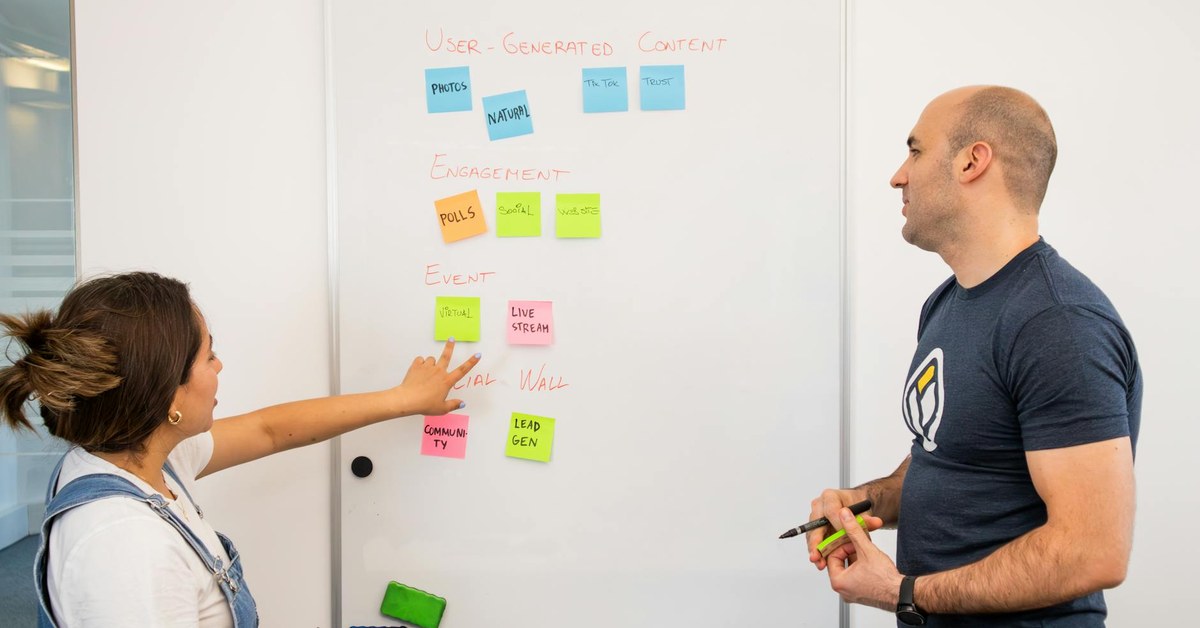

Every operations leader eventually reaches the same conclusion: we need to map our processes. The impulse is correct. The execution, almost universally, is catastrophic. Teams launch ambitious documentation projects, map three processes in exhaustive detail, then abandon the initiative as daily demands reassert themselves. Six months later, those three maps are outdated and the remaining processes — the ones actually causing the pain — remain invisible. This pattern repeats across industries, company sizes, and geographies with depressing regularity. Yet the organisations that crack this challenge unlock extraordinary advantages. Research shows companies with documented processes grow at twice the rate of those without, and process mapping exercises consistently identify 25–35% waste hiding in plain sight.
Mapping every process in your business requires a tiered approach: catalogue broadly at surface level first, then prioritise ruthlessly based on pain and value, and only then invest in detailed mapping of the processes that matter most. The goal is strategic clarity, not encyclopaedic documentation.
Why Most Process Mapping Initiatives Fail
The fundamental error is treating process mapping as a documentation exercise rather than a strategic one. Teams begin with the process they understand best — typically something administrative and relatively functional — and spend weeks producing beautiful flowcharts that nobody subsequently consults. Meanwhile, the cross-functional handoffs causing 60% of their process delays remain unmapped because they're complex, politically sensitive, and span multiple departments. The easy work gets done. The valuable work gets deferred.
There is a deeper structural problem. Sixty percent of business processes live exclusively in employees' heads, never documented in any form. This means mapping isn't merely a matter of transcribing existing knowledge into visual form. It requires extraction — pulling tacit knowledge from individuals who may not fully understand their own workflows, who've developed idiosyncratic workarounds they consider normal, and who may feel threatened by the transparency that documentation creates. This is change management disguised as a technical task.
The third failure mode is perfectionism. Organisations attempt to map processes at a level of detail appropriate for software engineering rather than operational management. Every exception, every edge case, every possible variation gets documented. The resulting maps are technically accurate and practically useless — too complex for anyone to consult during actual work. The Lean Process Mapping approach explicitly guards against this by focusing on value-add versus non-value-add steps rather than comprehensive procedural documentation.
The Three-Tier Catalogue Approach
Rather than mapping processes one by one in full detail, begin with a rapid catalogue of everything. This first tier takes days, not months. Gather your leadership team and simply list every repeated activity in the business — from client onboarding to invoice processing to recruitment to monthly reporting. Don't describe how they work. Just name them and assign a rough owner. The average SMB has 47 manual processes that could be partially or fully automated; your catalogue will likely surface between 40 and 80 distinct workflows depending on complexity.
The second tier involves a one-paragraph description of each process: its trigger, its output, who's involved, and — critically — its current pain level rated on a simple scale. This additional layer takes perhaps a week of distributed effort across department heads. It produces what I call a process landscape: a single document showing the full operational picture of your business at a glance. Most leaders have never seen their organisation this way, and the revelation alone often prompts immediate action on obvious absurdities.
The third tier is where genuine mapping happens — but only for the processes that warrant it. Using the pain ratings and strategic importance as filters, select the top ten to fifteen processes for detailed documentation. This prioritisation means your mapping effort concentrates where it generates returns rather than spreading thin across the entire landscape. Bottleneck elimination in the top three processes yields 80% of possible efficiency gains, which means even within your prioritised list, there's a clear hierarchy of impact.
Choosing the Right Level of Detail
Process maps exist on a spectrum from strategic overview to task-level instruction. For leadership purposes, you need the strategic layer: what happens, in what sequence, with what handoffs, and where time accumulates. You do not need screenshot-level procedural guides for every keystroke. Those detailed SOPs have their place — a single well-documented SOP saves 2–3 hours per week per team member who uses it — but they come after the strategic map, not instead of it.
The Lean methodology offers a practical framework here. For each process being mapped, identify steps that add value from the client's perspective and steps that exist purely for internal coordination, compliance, or historical reasons. Non-value-add steps are your immediate optimisation targets. Process standardisation applied to these areas alone reduces error rates by 50–70% because errors cluster where work is redundant, unclear, or performed differently by different people.
A useful rule of thumb: your strategic process map should fit on a single page. If it doesn't, you're either mapping at too granular a level or you've identified something that's actually multiple processes masquerading as one. Cross-functional handoffs — the transitions between people or departments — deserve special attention. Mark every handoff explicitly. These are where delays accumulate, information degrades, and accountability blurs. McKinsey's research confirms that these transitions, not the work itself, cause the majority of process delays.
Extracting Knowledge Without Creating Conflict
The human dimension of process mapping is routinely underestimated. When you ask someone to describe their workflow, you are implicitly asking them to make their role transparent and potentially dispensable. People respond to this perceived threat in predictable ways: over-complicating their descriptions, omitting shortcuts they fear might seem unprofessional, or actively resisting the exercise. Handling this requires deliberate framing.
Position process mapping as building organisational resilience rather than individual surveillance. The statistic that employee turnover costs twice the departing employee's salary — largely because undocumented knowledge leaves with them — provides a compelling frame. You're not documenting processes to replace people. You're documenting processes so that when someone is ill, on holiday, or promoted, the organisation doesn't collapse. This framing aligns individual self-interest with organisational goals because documented expertise makes people more promotable, not less valuable.
Practically, the most effective extraction method is observation combined with structured interview. Watch the process happen in real time, then ask clarifying questions. Don't ask people to write their own process maps — the translation from tacit knowledge to written documentation is a specialist skill. Have one person responsible for mapping who interviews multiple process participants and synthesises their accounts. This approach surfaces inconsistencies between how different people perform the same process, which itself is diagnostic. Where practices diverge, standardisation opportunities exist.
From Maps to Measurable Improvement
A process map that sits in a shared drive untouched is organisational theatre. The map's value emerges only when it becomes a tool for improvement. The DMAIC framework provides useful structure here: you've now Defined the process and can begin to Measure its performance. Cycle time, error rate, handoff delays, rework frequency — these metrics transform a static map into a living diagnostic tool. Process owners who review quarterly improve efficiency by 15% year-on-year because measurement creates accountability.
The immediate opportunities fall into three categories. First, elimination: steps that exist from historical inertia but add no current value. These are pure waste and can often be removed immediately. Second, automation: the average SMB has dozens of manual processes ripe for partial or full automation, and workflow automation delivers an average ROI of 400% within the first year. Third, standardisation: where multiple people perform the same process differently, establishing a single best method and documenting it as the standard. These three interventions — eliminate, automate, standardise — address the majority of process waste without requiring complex redesign.
Track your improvements explicitly. Companies spend 27% of productive time on process debt — workarounds for broken systems. As you reduce that percentage through systematic mapping and improvement, quantify the hours recovered. This data serves two purposes: it justifies continued investment in process work, and it builds organisational confidence that change delivers results. The next mapping initiative won't face the same scepticism because there's evidence from the last one.
Sustaining the Practice Beyond the Initial Push
The organisations that extract lasting value from process mapping treat it as continuous practice rather than one-off project. This requires embedding process ownership into role descriptions — someone must be explicitly accountable for each critical process's documentation remaining current. Without ownership, maps decay within months as the business evolves and documented procedures drift from actual practice. The Process Maturity Model maps this evolution clearly: from ad hoc through repeatable, defined, managed, and finally optimised — and each stage requires deliberate maintenance.
Calendar discipline matters. Set quarterly reviews for your top fifteen processes as non-negotiable leadership activities. These reviews needn't be lengthy — thirty minutes per process examining whether the documented version matches reality, whether metrics have improved or degraded, and whether conditions have changed enough to warrant redesign. Fifteen processes reviewed quarterly means roughly one per week. That cadence is sustainable and prevents the gradual rot that makes process maps irrelevant.
Finally, accept that completeness is a direction, not a destination. Only 4% of companies have integrated their processes end-to-end. You are not aiming for that standard immediately. You are aiming for progressive clarity — each quarter slightly more visible, slightly more documented, slightly more optimised than the last. Process mapping done imperfectly but consistently defeats process mapping done perfectly but once. The competitive advantage compounds over years as your process landscape becomes increasingly transparent while competitors continue operating from institutional memory and inherited assumption.
Key Takeaway
Map broadly at surface level first, then invest detailed mapping effort only where pain and strategic value intersect. The goal is not perfect documentation of everything — it is progressive operational clarity that compounds into measurable competitive advantage over time.