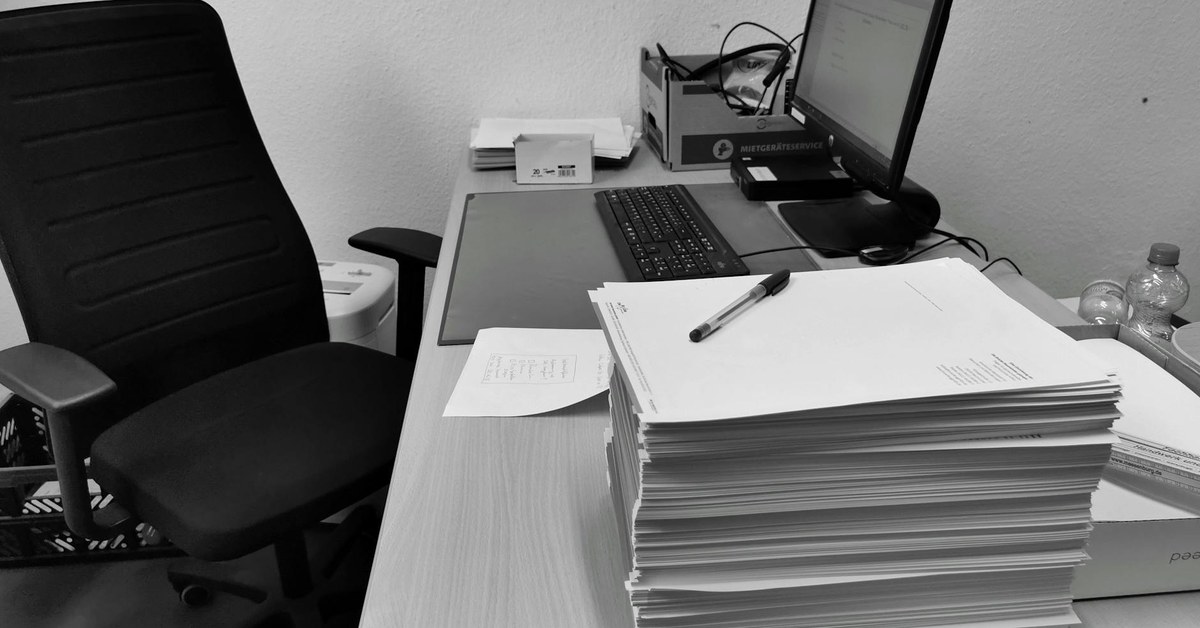

Last year, a financial services firm in Manchester lost its only Azure infrastructure specialist. He gave two weeks' notice on a Friday. By Monday, three colleagues had already spent a combined nine hours trying to locate deployment credentials he kept in a personal notebook. Within a month, the team estimated they had collectively burned over 200 hours retracing decisions he had made — decisions that lived entirely inside his head. This is not an unusual story. It is, in fact, the norm. And the cost is not merely inconvenience; it is a strategic vulnerability that most leadership teams dramatically underestimate.
Knowledge transfer when someone leaves requires a structured, ongoing capture process — not a frantic two-week scramble. Organisations that treat knowledge documentation as a continuous discipline rather than an exit-triggered emergency retain up to 80% more institutional knowledge and save an average of 3.7 hours per person per week in reduced search time. The key is building systems that capture knowledge as it is created, not after the person who created it has already mentally checked out.
The True Cost of Walking Knowledge
When a senior team member resigns, the visible cost is the recruitment fee and the salary gap. The invisible cost — the one that quietly haemorrhages productivity for months — is the knowledge that walks out the door with them. According to IDC research, the average worker already spends 2.5 hours per day searching for information they need. When the person who knew where things lived, why decisions were made, and how workarounds actually worked disappears, that search time multiplies. Professionals spend 19% of their entire workweek searching for and gathering information, and that figure spikes dramatically during leadership transitions.
The financial arithmetic is sobering. Poor information management costs organisations $5,700 per worker per year under normal circumstances. During a knowledge-holder departure, that figure can double or triple as remaining team members duplicate effort, recreate documents, and reverse-engineer decisions that were never recorded. An M-Files survey found that 83% of workers have recreated documents because they could not find existing ones — a statistic that becomes almost inevitable when the original creator has left the building.
Beyond the direct time cost lies something harder to quantify but equally damaging: decision quality. When the context behind strategic choices evaporates, successor teams either repeat mistakes already learned from or abandon sound approaches they do not understand. In knowledge-intensive industries, version confusion alone causes 10% of project delays. Strip away the person who understood the version history, and that figure climbs steeply. This is not a filing problem. It is a strategic risk that belongs on the leadership agenda.
Why the Two-Week Handover Is a Fantasy
Most organisations treat knowledge transfer as a notice-period activity. Someone resigns, and suddenly there is a flurry of handover documents, hurried meetings, and desperate attempts to extract years of accumulated understanding into a shared drive folder. The fundamental problem with this approach is not that it is poorly executed — though it usually is — but that it is structurally impossible. You cannot compress three years of contextual knowledge into ten working days, particularly when the departing employee is simultaneously wrapping up projects, attending farewell lunches, and mentally transitioning to their next role.
The data supports this scepticism. Workers toggle between 35 different applications per day, many involving document management. The departing employee's knowledge is scattered across email threads, chat messages, local files, shared drives, personal notes, and — critically — their own memory. Unstructured data makes up 80 to 90% of enterprise information, according to Gartner, and the most valuable knowledge — the 'why' behind decisions, the relationships between stakeholders, the shortcuts that actually work — almost never exists in any structured form at all.
European organisations face an additional pressure layer. GDPR non-compliance fines related to poor document management average €4.2 million, and a departing employee who was the sole custodian of data processing knowledge creates an immediate compliance vulnerability. The two-week handover does not merely fail to capture knowledge adequately; it actively creates risk by generating hastily assembled documentation that may be incomplete, inaccurate, or improperly classified. The solution is not a better handover process. It is eliminating the need for a handover process altogether.
Building a Continuous Knowledge Capture Culture
The organisations that handle departures with composure are not the ones with superior exit interviews. They are the ones where knowledge capture is woven into daily operations so thoroughly that no single departure creates a crisis. This begins with establishing a Single Source of Truth — one authoritative location per document type — and enforcing it with the same rigour you would apply to financial controls. When every project brief, decision log, and process document lives in one predictable place, the departure of any individual becomes a manageable event rather than an emergency.
A practical starting point is the daily file review discipline. Research suggests that a 10-minute daily file review prevents more than two hours of weekly search-and-rescue operations. Applied across a team, this means each member spends roughly 50 minutes per week ensuring their working knowledge is findable and current — an investment that pays for itself many times over when any team member departs. Combine this with a standardised naming convention (following a date-project-version-author protocol, for instance) and you reduce search time by 50 to 70%. These are not theoretical gains; they are measured outcomes from organisations that have implemented structured file systems.
The cultural shift matters as much as the technical infrastructure. Knowledge hoarding often persists because it confers informal power — being the person everyone has to ask is a form of job security. Leadership must actively dismantle this dynamic by recognising and rewarding knowledge sharing, making documentation quality a performance metric, and modelling the behaviour themselves. When executives visibly maintain their own decision logs and process notes, the rest of the organisation follows. The goal is an environment where capturing knowledge is as natural as creating it.
The PARA Method Applied to Organisational Knowledge
Tiago Forte's PARA method — organising information into Projects, Areas, Resources, and Archives — provides an elegant framework for knowledge transfer readiness. Projects contain active, time-bound work with clear deliverables. Areas hold ongoing responsibilities with maintained standards. Resources store reference material for future use. Archives preserve completed or inactive items. When an organisation adopts this structure consistently, a departing employee's knowledge naturally falls into categories that others can navigate without guidance.
The power of PARA for knowledge transfer lies in its distinction between active and reference material. Most handover failures occur because departing employees dump everything into a single folder — active project files mixed with outdated references, current processes alongside abandoned experiments. The receiving team then spends weeks sorting signal from noise. Under PARA, the active projects are already clearly delineated, the ongoing area responsibilities are already documented, and the reference resources are already categorised. The departure becomes a matter of reassigning ownership rather than reconstructing context.
Implementing PARA at scale requires coupling it with the 5S methodology: Sort (eliminate what is unnecessary), Set in Order (arrange what remains logically), Shine (maintain cleanliness), Standardise (create consistent protocols), and Sustain (build habits that persist). Cloud-based file systems reduce time-to-find by 75% compared to local storage, but only if the underlying structure is sound. A cloud drive with chaotic folder hierarchies is merely a faster route to the same confusion. The framework provides the logic; the methodology provides the discipline; the cloud provides the accessibility. All three are necessary.
Practical Steps for Knowledge-Resilient Teams
Start with a knowledge audit. Identify every team member's unique knowledge domains — the processes only they understand, the client relationships only they manage, the technical configurations only they maintain. This audit invariably reveals uncomfortable concentrations of single-point-of-failure knowledge. Do not treat this as an indictment; treat it as a diagnostic. The average executive saves 3.7 hours per week after implementing a structured file system, and those gains compound across the entire team when the structure is designed for resilience rather than individual convenience.
Next, establish documentation rituals that operate independently of departure triggers. Weekly decision logs, monthly process reviews, and quarterly knowledge audits create a rhythm of capture that makes departure-driven handovers largely unnecessary. Standardised folder hierarchies reduce new employee onboarding friction by 30%, which means these same structures that protect against knowledge loss also accelerate the integration of replacements. The investment serves double duty, and the return is measurable in both time recovered and risk reduced.
Finally, address the technology layer with pragmatism rather than ambition. Email attachments remain the primary document-sharing method for 56% of SMBs despite cloud alternatives being readily available. Forcing an overnight migration to a comprehensive knowledge management platform will generate resistance and partial adoption — which is worse than no adoption at all. Instead, migrate incrementally: start with the highest-risk knowledge domains, demonstrate the time savings, and expand from there. Duplicate files waste 21% of company storage and create version control nightmares, so even modest consolidation efforts yield visible, motivating results.
Turning Knowledge Transfer into Competitive Advantage
Organisations that master knowledge transfer do not merely avoid losses — they create genuine competitive advantage. When institutional knowledge is systematically captured and accessible, decision-making accelerates because leaders can build on prior analysis rather than starting from scratch. Innovation improves because teams can see what has been tried before, what worked, and what failed. Client relationships deepen because transitions between account managers become seamless rather than disruptive.
The strategic implications extend to talent acquisition and retention. Prospective employees — particularly senior ones — evaluate organisations partly on operational maturity. A company that can demonstrate well-structured knowledge systems signals professionalism, stability, and respect for people's time. Conversely, organisations where every departure triggers a crisis signal dysfunction that discourages precisely the calibre of hire they need most. In a labour market where skilled professionals have options, operational resilience is a recruitment asset.
The most successful knowledge transfer programmes we advise on share a common characteristic: they are led from the top. When a CEO or managing director visibly champions knowledge capture — maintaining their own documentation, referencing the knowledge base in meetings, celebrating teams that document well — the cultural shift accelerates dramatically. This is not a technology project or an HR initiative. It is a leadership discipline that happens to use technology and involve HR. Position it accordingly, resource it proportionally, and measure it rigorously. The organisations that do so never have to experience the panic of a critical resignation again.
Key Takeaway
Stop treating knowledge transfer as a two-week exit activity. Build continuous capture into daily operations — 10 minutes of daily documentation prevents hours of weekly searching and ensures no single departure can destabilise your team. Start with a knowledge audit this week to identify your single points of failure.