
You don't need another complex productivity system. The elaborate frameworks with their coloured matrices, priority codes, and intersecting quadrants haven't worked — not because they're wrong in principle, but because they're too complex to maintain under the pressure of a real business day. When your phone is ringing, your inbox is overflowing, and three people need answers in the next hour, you're not going to consult a four-quadrant priority matrix. You need something you can hold in your head, apply in seconds, and trust to guide your entire day. The 3-3-3 Method is that something. Three deep work tasks. Three maintenance tasks. Three small wins. Nine items total. No more, no less. It works because it respects two truths about executive productivity: you can realistically complete nine meaningful items in a day (not the forty-seven on your current to-do list), and structure doesn't need to be complex to be effective. Only 8% of people achieve their goals through intention alone, but 42% succeed with specific written plans. Nine items on a card is the simplest possible written plan that consistently produces strategic progress alongside operational maintenance.
The 3-3-3 Method structures each day around three categories of nine total items: three deep work tasks requiring focused cognition, three maintenance tasks keeping operations running, and three small wins that generate momentum — creating a daily plan that's simple enough to follow under pressure and comprehensive enough to ensure strategic progress.
The Three Categories That Cover Everything That Matters
The 3-3-3 Method divides your day into three categories, each containing exactly three items. The first category — Deep Work — contains the three tasks that require your highest cognitive engagement and produce the most strategic value. These are the tasks you'd be most proud to have completed by day's end: completing a strategic plan section, making a consequential decision, having a crucial conversation, developing a new offering, or solving a complex problem. They demand uninterrupted focus, your peak energy, and the kind of thinking that can't happen in a noisy, fragmented environment.
The second category — Maintenance — contains the three tasks that keep your business operating effectively but don't represent strategic advancement. Email processing, team check-ins, routine approvals, report reviews, administrative duties. These are necessary and non-negotiable but they're also lower-cognitive-demand activities that can be handled in mid-energy periods without degrading quality. Workers who follow documented processes are 3.5x more productive, and your maintenance category benefits most from documented processes — templates, checklists, and SOPs that allow these recurring tasks to be executed efficiently without requiring your full creative engagement.
The third category — Small Wins — contains three quick tasks that take under fifteen minutes each and generate a sense of progress and completion. Sending a thank-you note, clearing a minor administrative item, making a brief call you've been putting off, updating a document, responding to a straightforward request. These seem trivial individually but serve a crucial psychological function: they provide the completion signals that sustain motivation throughout the day. Quick wins in the first 30 days increase long-term habit adherence by 45%, and daily small wins serve the same function on a daily timescale — each completed item generates the momentum that carries you through the deeper, harder work.
Setting Up Your 3-3-3 the Evening Before
The 3-3-3 Method gains its power from pre-decision: choosing your nine items before the day begins, when your thinking is clear and your priorities are fresh. Spend five minutes each evening (or during your weekly review for the entire week) selecting tomorrow's nine items. For each deep work task, ensure it advances one of your quarterly priorities and can be meaningfully progressed in 60-90 minutes. SMART Goals ensure each item is Specific (not 'work on strategy' but 'draft the market analysis section of the Q3 strategy document'), Measurable (you'll know when it's done), and Achievable within the time available.
Implementation intentions anchor each item to a specific time: 'At 9am, I will begin deep work task one and continue until 10:30am.' 'At 11am, I will process email (maintenance task one) for thirty minutes.' 'At 2pm, I will send the three thank-you notes (small wins).' The pre-assignment eliminates the morning decision of what to work on — a decision that, in the absence of pre-planning, often defaults to whatever seems most urgent rather than most important. The Habit Loop — cue (evening, after dinner or before leaving the office), routine (select nine items and assign times), reward (the calm certainty of knowing exactly what tomorrow will produce) — makes the planning itself a sustainable habit.
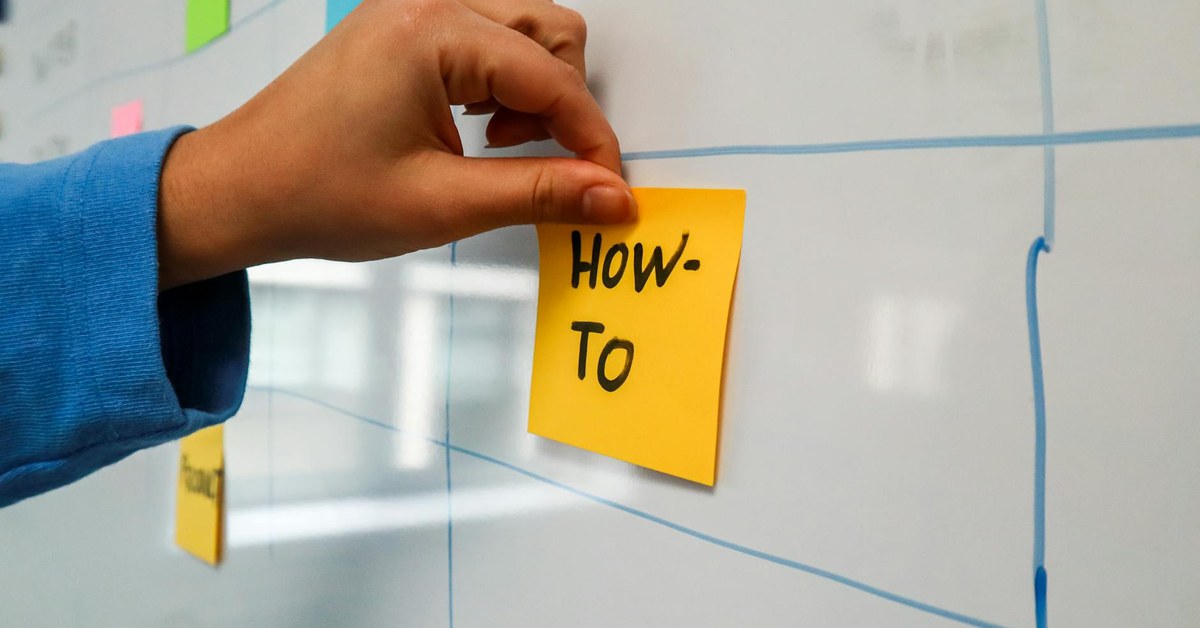
Write the nine items on a single card, a sticky note, or the top of your daily planner page. Visual checklists reduce errors by 30-50%, and your 3-3-3 card is the simplest possible visual checklist for a productive day. Keep it visible throughout the day — on your desk, next to your keyboard, as your phone's lock screen. When reactive demands arrive (and they will), glance at the card. If the demand is more important than anything on the card, it replaces an item. If it's not, it waits. The card becomes your decision filter for every incoming request: does this warrant displacing one of my nine pre-decided priorities? Usually, the answer is no.
Executing the Three Deep Work Blocks
Your three deep work tasks are scheduled during your peak cognitive hours — typically the first three hours of your working day. Each task gets a 60-90 minute block with no interruptions, no email, no meetings, and no notifications. The 2-Minute Rule applies to interruptions: if something genuinely takes two minutes and the cost of interruption is less than the cost of delay, handle it and return. Everything else goes on a 'later' list to be addressed during maintenance blocks. Progressive skill building increases competence 3x faster than unstructured approaches, and protected deep work blocks are the practice environment where your strategic thinking competence develops most rapidly.
The sequence matters. Place your most cognitively demanding deep work task first, when your mental resources are at absolute peak. Place the second task after a brief transition (five minutes, not thirty). Place the third task after a longer recovery break (fifteen to twenty minutes). This rhythm matches the natural depletion and partial recovery pattern of prefrontal cortex function. The spacing effect shows that distributed practice improves retention by 200% — and distributing your deep work across three separate blocks with recovery intervals produces better output than a single three-hour marathon that depletes you for the rest of the day.
Define 'done' for each deep work task before you begin. Not 'work on the proposal' but 'complete the pricing section of the proposal and send for review.' Not 'think about hiring' but 'write the job description and brief the recruiter.' Accountability partnerships increase goal achievement by 95%, and your 3-3-3 card creates an accountability partnership with yourself — each checked-off deep work task is a visible commitment honoured. Micro-habits under two minutes have 80% adherence rates, and the micro-habit of checking off each completed item provides the dopamine reward that sustains focus through the harder, longer blocks.
Managing Maintenance Without Letting It Expand
Maintenance tasks are the most dangerous category because they naturally expand to fill all available time. Email processing that should take thirty minutes becomes ninety. A team check-in that should take fifteen becomes forty-five. A report review that should take twenty becomes an hour of data exploration that produces no additional insight. Time-box each maintenance task ruthlessly: thirty minutes for email, twenty minutes for the check-in, fifteen minutes for the report review. When the time box expires, the task is done — regardless of whether every email is answered or every data point is explored.
Templated workflows save 25-40% time on recurring tasks, and your maintenance tasks are the most recurring tasks in your day. Email templates for common responses, meeting agendas for recurring check-ins, review checklists for standard reports — each template compresses the maintenance task into its minimum viable duration. Standard Operating Procedures reduce onboarding time by 50%, and SOPs for your maintenance tasks allow them to be progressively delegated to team members, eventually removing them from your 3-3-3 entirely and freeing those three slots for additional deep work or strategic small wins.
Schedule maintenance tasks for your mid-energy period — after deep work but before the afternoon energy decline. This placement serves two purposes: it uses a cognitive period that's adequate for operational work but suboptimal for strategic thinking, and it provides a natural transition between the intense focus of deep work and the lighter engagement of small wins. The Habit Loop for maintenance is: cue (deep work blocks complete), routine (execute three maintenance tasks within their time boxes), reward (operational demands handled efficiently, creating clear space for the afternoon). Process documentation reduces key-person dependency by 60% — each maintenance task you document and systematise is one step closer to removing it from your personal 3-3-3 permanently.
Small Wins That Generate Disproportionate Momentum
The three small wins category is the secret engine of the 3-3-3 Method. Psychologically, completion generates momentum — each finished task produces a small dopamine reward that sustains motivation for subsequent tasks. By building three guaranteed completions into every day, you create a motivational baseline that prevents the demoralising experience of working hard all day and feeling like you accomplished nothing. Quick wins in the first 30 days increase long-term habit adherence by 45%, and daily small wins serve this function continuously, maintaining the psychological momentum that makes the harder deep work sustainable.
Small wins should take under fifteen minutes each and produce a tangible, visible result: a sent message, a cleared task, a brief document completed, a relationship touchpoint made. They're drawn from the accumulated small tasks that typically crowd your to-do list but never make it onto a priority framework — precisely because they're small. The 3-3-3 Method gives them a legitimate home: not competing with deep work for attention but occupying their own dedicated category where they're accomplished efficiently and with appropriate (minimal) cognitive investment. The Habit Loop — cue (maintenance complete), routine (execute three small wins), reward (visible progress and list completion) — makes the end of the day feel accomplished rather than exhausting.
Select small wins that create forward motion in areas that deep work and maintenance don't cover. A thank-you note to a referral partner (relationship maintenance). A quick update to your LinkedIn profile (brand visibility). A five-minute journal entry (personal reflection). A brief call to a potential client (pipeline development). Each small win takes minutes but maintains progress across the breadth of your professional responsibilities. Only 8% achieve goals without structure — the 3-3-3 structure ensures that even the smallest components of your professional life receive consistent, if brief, attention.
Adapting the 3-3-3 When Days Go Sideways
No daily structure survives contact with reality intact every single day. The 3-3-3 Method's strength is its adaptability: when a genuine crisis erupts, the response is simple. Promote the crisis to deep work task one (it requires focused cognitive engagement and is now your most important outcome). Demote the least urgent deep work task to tomorrow's list. Leave maintenance and small wins intact if possible; compress them if necessary. The structure bends without breaking because nine items provide enough flexibility to absorb one or two disruptions while maintaining the day's overall productivity.
On exceptionally chaotic days, the 3-3-3 might reduce to a 2-2-2 or even a 1-1-1. That's acceptable — the principle is maintained even when the volume is reduced. One deep work task completed is infinitely more than zero. Two maintenance items handled is better than ten half-addressed in a panic. Implementation intentions handle the adaptation: 'When my day is disrupted by a genuine emergency, I will identify my single most important deep work task and protect time for it, accepting that the remaining items shift to tomorrow.' Written frameworks are shared and reused 5x more than verbal advice — your 3-3-3 adaptation framework, understood and practised, becomes automatic under pressure.
The weekly review provides the correction mechanism. If your 3-3-3 is regularly disrupted — more than twice per week — the issue isn't the method; it's the environment. Either your definition of 'crisis' is too broad (most interruptions aren't genuine emergencies), your team lacks the capability or authority to handle routine demands (a delegation and SOP issue), or your schedule doesn't include adequate buffer time for the predictable unpredictability of business operations. Accountability partnerships increase goal achievement by 95% — discuss your 3-3-3 adherence with your accountability partner weekly, identifying whether disruptions are genuinely unavoidable or symptoms of a structural problem that's solvable.
Key Takeaway
The 3-3-3 Method structures each day around nine pre-decided items across three categories: three deep work tasks during peak energy, three maintenance tasks during mid-energy, and three small wins for momentum. Set up the evening before, execute with time-boxed discipline, adapt when disruptions occur, and review weekly to ensure the structure produces consistent strategic progress.