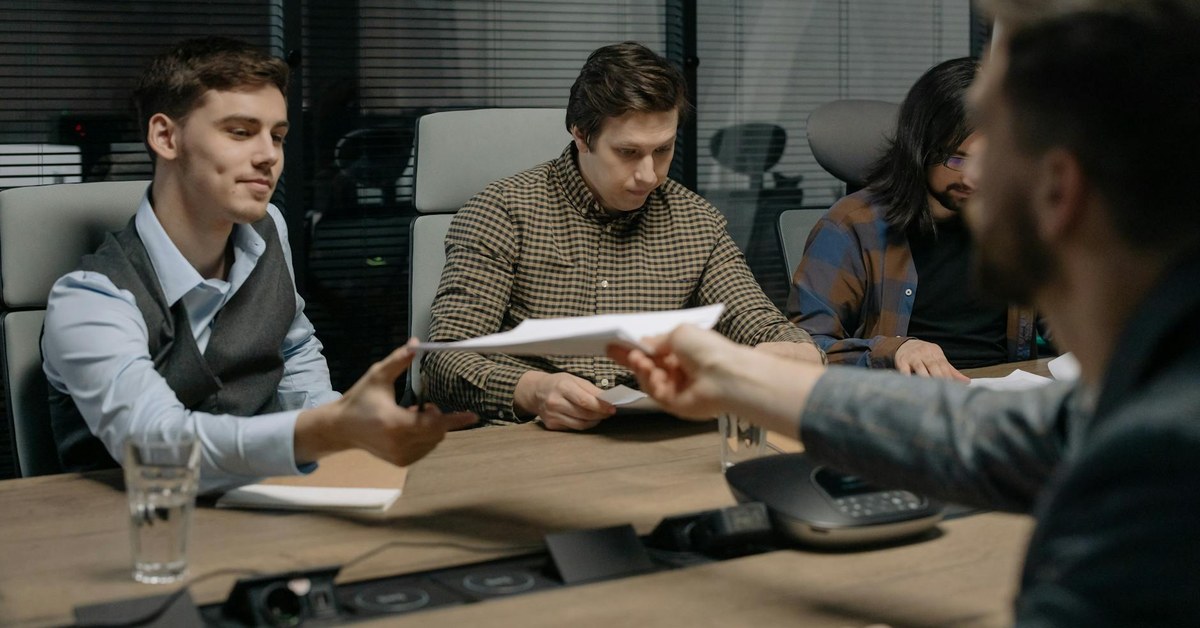

Nobody talks about the deals lost to bad meetings. The post-mortem says the competitor had a better price, a stronger feature set, or an existing relationship. But behind these convenient explanations lies a more uncomfortable truth: the meeting itself killed the deal. The presentation that ran 20 minutes over schedule. The seven-person delegation that overwhelmed a two-person client team. The executive who checked their phone three times during the client's question. The follow-up that arrived a week late with action items nobody could remember. These are not minor lapses — they are signals. Every meeting with a client is an audition for how the relationship will work. When the audition is disorganised, disrespectful of time, or unfocused, the client draws a reasonable conclusion: this is how working with this firm will feel. And they choose someone else.
Meetings kill deals when they disrespect the client's time, include too many attendees, lack clear structure, or fail to produce timely follow-up. The fix is rigorous preparation, a tight agenda shared in advance, a small team with defined roles, and same-day documentation of next steps.
The Three Meeting Failures That Lose Business
The first failure is running over time. When a client allocates 45 minutes and your team takes 70, the message is unmistakable: your agenda matters more than theirs. Every minute past the scheduled end undermines the trust you are trying to build. The client is not impressed by how much content you had to share — they are frustrated by your inability to manage a clock. Research shows that only 50 per cent of meeting time is considered effective by attendees. In a client meeting, the client is making the same calculation, and their tolerance for wasted time is far lower than an internal colleague's.
The second failure is bringing too many people. A client meeting with seven people on your side and two on theirs creates an intimidating power imbalance. The client feels outnumbered, the discussion becomes unwieldy, and decision-making grinds to a halt. Bain's research showing that each additional attendee beyond seven reduces decision effectiveness by ten per cent applies with equal force in client settings. The optimal client meeting has three to four people per side, each with a clearly defined role: the relationship owner, the subject expert, and the decision-maker.
The third failure is poor follow-up. A brilliant meeting that produces no written summary, no documented commitments, and no clear next steps within 24 hours is a meeting the client will forget — or worse, remember as disorganised. The cost of a one-hour meeting with eight executives ranges from £2,400 to £4,800 in loaded salary. If the output of that investment is silence, the client rightfully questions whether the firm can execute on its promises.
How Meeting Dynamics Signal Organisational Competence
Clients use meetings as a proxy for how your organisation operates. If your internal coordination is visible — the presentation is polished, the transitions between speakers are smooth, the team defers to each other with respect — the client infers that your delivery will be similarly well-orchestrated. If the meeting is chaotic — people talk over each other, slides are out of order, nobody knows who is leading — the client infers that the engagement will be equally chaotic. This inference is not always accurate, but it is always made.
Time management in client meetings is particularly revealing. An organisation that starts meetings on time, respects the agenda, and finishes early demonstrates a culture of discipline and respect. An organisation that arrives five minutes late, adds agenda items on the fly, and casually extends past the end time demonstrates the opposite. Meetings have increased 13.5 per cent since 2020 across industries; the firms that have disciplined their meeting culture stand out precisely because the standard is so low.
The preparation is also visible. When your team references the client's specific situation, uses their terminology, and addresses their stated concerns rather than delivering a generic presentation, the client knows you have invested time in understanding their needs. When the presentation is obviously repurposed from another client with the logos swapped, the client knows that too. Preparation is the difference between a meeting that advances a deal and one that stalls it.
Structuring Client Meetings for Maximum Impact
The most effective client meeting follows a simple structure: listen first, then present. Open with a question that invites the client to share their current priorities, concerns, or constraints. This does two things: it gives you real-time intelligence that shapes how you present your solution, and it demonstrates that you care about their perspective more than your own pitch. The NOSTUESO framework — stated purpose, expected outcomes, and owner — should be shared with the client before the meeting so they know what to expect and can prepare accordingly.
Allocate time asymmetrically. In a 45-minute meeting, spend the first 15 minutes listening and asking questions, the next 20 minutes presenting your response tailored to what you just heard, and the final 10 minutes agreeing on next steps. This structure ensures that the presentation is relevant rather than generic, and that the meeting concludes with clear commitments rather than vague pleasantries. The 50/25 Meeting Rule applies here too: if you schedule 45 minutes, aim to finish in 40.
Every client meeting should end with a verbal summary of agreed next steps, delivered by your team's lead and confirmed by the client's lead. This takes 90 seconds and prevents the most damaging post-meeting failure: divergent recollections of what was agreed. Follow the verbal summary with a written version within four hours — not 24 hours, four hours. Speed of follow-up is a competitive differentiator that signals urgency and reliability.
The Role Clarity That Prevents Client Meeting Dysfunction
In every client meeting, each person on your team should have a defined role. The relationship owner manages the flow and makes introductions. The subject expert addresses technical or domain-specific questions. The note-taker captures decisions and action items in real time. If you bring four people without role clarity, you bring four potential sources of confusion. People interrupt each other, contradict each other, or — worst of all — answer questions outside their expertise with confident inaccuracy.
Pre-meeting alignment is essential. Brief your team on the client's situation, the meeting's objectives, and each person's role for 15 minutes before the client arrives. Agree on who leads each section, who handles questions, and who stays quiet unless directly addressed. This rehearsal prevents the common embarrassment of two people from your team answering the same question simultaneously with different answers. The RAPID framework, adapted for client settings, ensures that your team presents a unified front.
Limit your team size to match the client's. If the client is sending two people, you send two or three. The asymmetry of seven-against-two is not a display of strength — it is a display of poor judgment. Amazon's Two-Pizza Rule provides a useful heuristic: if you need more than six people to represent your firm in a single client meeting, you are either covering too many topics or including people who should receive a summary instead.
Follow-Up as a Competitive Weapon
The meeting ends when the last participant leaves the room. The deal-making continues in the follow-up. A same-day email that recaps decisions, lists action items with owners and deadlines, and thanks the client for their time converts a good meeting into a compelling demonstration of execution capability. A follow-up that arrives three days later, vague and incomplete, converts a good meeting into a missed opportunity.
Structure the follow-up identically to the meeting notes template: date, attendees, decisions made, action items with owners and deadlines, open questions, and proposed next meeting. This consistency builds a paper trail that the client can reference, forward to their own decision-makers, and use to track your firm's reliability over time. The follow-up document is often more influential than the meeting itself, because it is what the client reviews when making their final decision — long after the meeting's emotional impact has faded.
Track your follow-up velocity as a metric. If your average time from meeting end to follow-up email exceeds 24 hours, you are losing deals to competitors who are faster. Reducing meetings by 40 per cent increased productivity by 71 per cent — and some of that reclaimed time should be invested in faster, more thorough client follow-up. The meeting is the beginning of the conversation, not the end. The organisations that win deals consistently are those that treat follow-up as an extension of the meeting rather than an afterthought.
Learning From Meetings That Did Not Win the Deal
Most organisations conduct post-mortems on lost deals but rarely examine the meetings that preceded them. This is a missed opportunity. After a lost deal, ask the client for candid feedback on the meeting experience. Did the team seem prepared? Was the presentation relevant to their needs? Did they feel their time was respected? Was the follow-up timely and useful? The answers are often revealing and almost always actionable.
Build a meeting retrospective into your client engagement process. After every significant client meeting — whether or not the deal closes — the team spends ten minutes reviewing what worked, what did not, and what they would do differently. This is not a blame exercise; it is a continuous improvement practice. The teams that learn from every meeting steadily outperform those that only reflect when something goes wrong. Seventy-one per cent of senior managers consider their meetings unproductive — client meetings should never be among them.
Create a library of meeting best practices drawn from your retrospectives. Document the structures, techniques, and preparation methods that produced the best client outcomes. Share this library with new hires and use it as a training resource for junior team members who are learning to run client meetings. The cost of a single poorly run client meeting — measured in lost revenue, damaged reputation, and wasted executive time — far exceeds the investment of building this institutional knowledge. Every meeting is an opportunity to win or lose trust. Treat it accordingly.
Key Takeaway
Client meetings are auditions for the working relationship. Respect the client's time, bring a small team with clear roles, follow a listen-first structure, and deliver same-day follow-up with documented next steps. The meeting that wins the deal is not the flashiest — it is the most disciplined.