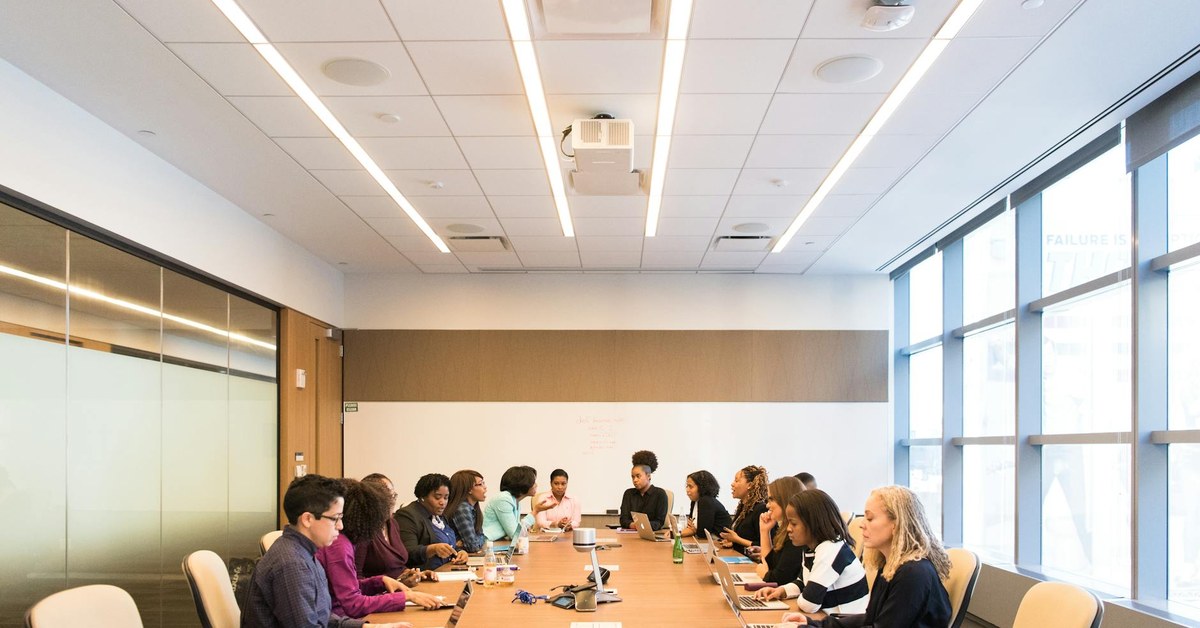

You just spent 45 minutes in a meeting where one person shared a screen, read through a document that could have been emailed, and asked if there were any questions. There were no questions. There are never any questions. Yet this meeting recurs weekly, consuming the time of eight people who could have read the document in five minutes and moved on with their day. This is the meeting that should have been an email, and it is the most common meeting type in modern business. Harvard Business Review reports that 71 per cent of senior managers consider meetings unproductive and inefficient. The Doodle State of Meetings Report finds that only 50 per cent of meeting time is considered effective by attendees. Unnecessary meetings cost US companies $37 billion annually. The meeting that should have been an email is not a joke — it is an epidemic.
A meeting should have been an email when its primary purpose is information sharing rather than discussion or decision-making. The test is simple: if the meeting could achieve its purpose through a written document that attendees read on their own time, it should not be a meeting.
The Simple Test for Every Meeting
Before scheduling or attending any meeting, apply this filter: does this meeting require real-time interaction between participants to achieve its purpose? If the answer is yes — because a decision needs group input, a negotiation requires back-and-forth, or a creative session needs collaborative energy — the meeting is justified. If the answer is no — because the purpose is to share information, broadcast updates, or review documents — the meeting should be an email, a memo, a recorded video, or a shared document.
The NOSTUESO framework adds structure: NO meeting without STated pUrpose, Expected outcomeS, and Owner. When you apply this framework to the meetings in your calendar, you discover that many cannot specify expected outcomes beyond participants will be informed. Being informed does not require synchronous attendance from eight people — it requires a well-written communication that people can consume at their convenience.
The average professional attends 62 meetings per month according to Atlassian. Applying the real-time interaction test typically eliminates 25 to 35 per cent of those meetings, recovering 15 to 20 hours per month for focused work. The elimination does not reduce information flow — it accelerates it because written communication can be consumed faster than the equivalent meeting.
Why Information-Sharing Meetings Persist
If everyone agrees that information-sharing meetings are wasteful, why do they persist? Three reasons. First, meetings create the illusion of accountability — having people in a room while information is shared feels more reliable than trusting them to read an email. Second, meetings provide social interaction that the sender needs even if the recipients do not. Third, the sender has not invested the effort to write a clear, comprehensive communication and uses the meeting as a substitute for structured thinking.
Meetings have increased 13.5 per cent since 2020 according to Microsoft Work Trend Index. The increase is concentrated in exactly the meetings that should be emails — status updates, progress reports, and information broadcasts that proliferated as remote work eliminated the casual hallway conversations that previously carried this information. The meetings were created as temporary replacements for informal communication and became permanent fixtures.
Executives spending 23 hours per week in meetings are devoting a significant portion of those hours to information that could be communicated in writing. The cost is not just the meeting time — it is the context-switching cost before and after, the preparation time, the calendar fragmentation, and the cognitive recovery time documented at 23 minutes per interruption by the University of California Irvine.
The Email That Is Better Than the Meeting
A well-structured email is not just a replacement for a meeting — it is a superior communication method for information sharing. It can be consumed at the reader's optimal time rather than the scheduler's convenience. It can be referenced later without relying on memory or meeting notes. It can be forwarded to stakeholders who were not in the meeting. And it takes five minutes to read rather than forty-five minutes to attend.
The email alternative requires structured writing that many professionals have never been taught. A meeting-replacement email should have: a clear subject line that states the purpose, the key information in the first paragraph, supporting details in subsequent paragraphs, any required actions clearly listed with deadlines, and a statement of whether response is needed. This structure takes ten minutes to write and saves forty-five minutes of meeting time for every attendee.
Amazon's written memo culture demonstrates that replacing meetings with documents does not reduce decision quality — it improves it. Written communication forces the author to structure their thinking before sharing it, which produces clearer analysis and more actionable conclusions than the improvised presentations that characterise most meetings. Only 50 per cent of meeting time is considered effective by attendees — written communication can easily exceed this threshold.
The Meetings That Should Stay Meetings
Not all meetings should be emails. Some interactions genuinely require real-time human presence. Creative brainstorming sessions where ideas build on each other in unpredictable ways. Difficult conversations about performance or conflict that require emotional nuance and immediate responsiveness. Strategic discussions where competing perspectives need to be reconciled through dialogue. Relationship-building conversations where the connection itself is the purpose.
The RAPID Decision Framework from Bain helps identify which decisions require meetings. Decisions where multiple people have genuine decision rights benefit from real-time discussion. Decisions where one person has clear authority do not — they need input, which can be gathered asynchronously, and communication of the decision, which can be shared in writing.
Reducing meetings by 40 per cent increased productivity by 71 per cent in the MIT Sloan study. The 40 per cent that was eliminated was overwhelmingly the meetings that should have been emails. The remaining 60 per cent — the meetings that genuinely required real-time interaction — became more productive because attendees arrived more focused, more prepared, and less fatigued from the meetings that no longer existed.
Making the Cultural Shift
Shifting from meeting-first to message-first culture requires leadership modelling. Start cancelling your own information-sharing meetings and replacing them with written communications. When you demonstrate that important information can flow without synchronous attendance, your team receives permission to do the same. The cultural shift starts at the top.
The resistance you encounter will be emotional, not rational. People will feel excluded when meetings are cancelled, even meetings they considered wasteful. They will worry about missing information, even when the written alternative provides more complete information. They will miss the social interaction, even when the interaction was not productive. Acknowledge these concerns while maintaining the change.
71 per cent of senior managers agree meetings are unproductive. The cultural consensus already exists — what is missing is the structural change. Be the leader who converts consensus into action. Every meeting you convert to an email creates a proof point that the alternative works. Over weeks and months, these proof points accumulate into cultural transformation.
The ROI of Fewer Better Meetings
When information-sharing meetings are eliminated, the meetings that remain become dramatically more valuable. Attendees arrive more focused because their days are less fragmented. Discussion quality improves because people have more cognitive capacity. Decisions are better because they are made from strategic thinking rather than reactive exhaustion.
CEOs working 62.5 hours per week can potentially reclaim 8 to 10 hours by eliminating the meetings that should have been emails. Those hours, invested in strategic thinking, deep work, and genuine leadership, produce returns that no status update meeting ever could. Stanford research on diminishing returns means that reducing from 62.5 to 52 hours does not just recover personal time — it improves the quality of every remaining working hour.
The meeting that should have been an email is the most universally acknowledged productivity problem in modern business. The solution is not complicated. It requires only the willingness to write clearly, the discipline to apply filters consistently, and the leadership courage to model a different way of working. Your team will thank you. Your calendar will thank you. Your cognitive capacity will thank you.
Key Takeaway
Most meetings should be emails when their primary purpose is information sharing rather than discussion or decision-making. Apply the real-time interaction test to every meeting, replace information-sharing meetings with structured written communications, and model the cultural shift from meeting-first to message-first.