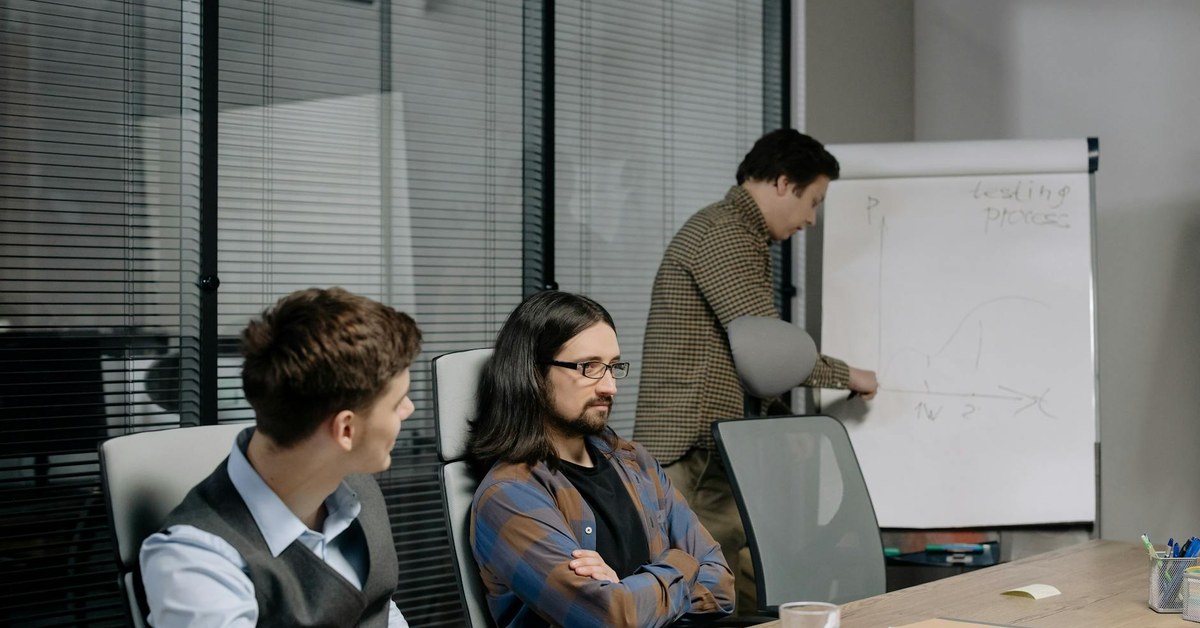

There is an appealing logic to democratic meetings: give everyone a voice, seek consensus, and make decisions that the whole group supports. In theory, this approach produces better decisions because it incorporates diverse perspectives, builds buy-in, and ensures nobody feels excluded. In practice, it does none of these things reliably. Democratic meetings are slower because consensus takes longer than directed decision-making. They produce weaker outcomes because the final decision is often a watered-down compromise that fully satisfies nobody. And they frustrate participants because the process of seeking universal agreement turns every discussion into a negotiation where the most persistent voice — not the best argument — prevails. Executives already spend 23 hours per week in meetings. When a significant portion of that time is consumed by consensus-seeking processes that add cost without adding quality, the organisation pays in both hours and outcomes.
The problem with democratic meetings is that they conflate input with decision-making. Everyone should have the opportunity to contribute perspective, but one person should make the final call. The RAPID framework provides this structure: gather input widely, then assign decision authority to the person closest to the consequences.
Why Consensus Feels Good But Decides Poorly
Consensus-seeking activates a deep social need for harmony and belonging. When a group reaches agreement, it produces a collective sense of accomplishment — we all agreed, so the decision must be good. But this emotional satisfaction is misleading. Research on group decision-making consistently shows that consensus tends to converge on the least objectionable option rather than the best one. The proposals that generate no strong opposition survive; the bold proposals that generate passionate debate are softened, amended, and diluted until they are acceptable to everyone and inspiring to nobody.
This dynamic is called the Abilene Paradox — a group collectively agrees to a course of action that none of its members individually supports, because each person assumes the others want it. In meetings, this manifests as polite agreement followed by private dissatisfaction. The decision is made, but nobody feels ownership of it. When implementation proves difficult, the lack of genuine commitment becomes apparent, and the group reconvenes to revisit a decision that was never truly made.
The time cost of consensus is also significant. A decision that one empowered person could make in five minutes can take a group 45 minutes to reach through consensus, and the quality of the final decision is no better — often it is worse. Only 50 per cent of meeting time is considered effective by attendees. When consensus processes stretch that ineffective time across multiple rounds of discussion, the waste multiplies.
The Illusion of Equal Voice in Group Settings
Democratic meetings promise equal voice, but they rarely deliver it. Research on group dynamics shows that in any meeting of more than four people, a small number of individuals dominate the conversation. Typically, two or three people account for 60 to 80 per cent of speaking time. The remaining participants either cannot find an opening to speak or have learned that their contributions will be talked over. The democratic ideal of equal participation is undermined by the practical reality of group dynamics.
Seniority amplifies this effect. When a VP and a manager are in the same meeting and the VP speaks first, the manager is unlikely to offer a contradicting view — even if their view is better informed. The democratic format does not eliminate hierarchy; it simply hides it behind a veneer of openness. The manager votes with the VP not because they agree, but because disagreeing carries social risk. Each additional attendee beyond seven reduces decision effectiveness by ten per cent, and the reduction is driven precisely by this conformity pressure.
The alternative is not less input but better-structured input. Collect perspectives in writing before the meeting, so that every voice is represented without the distortion of group dynamics. Use anonymous polling for sensitive decisions where hierarchy might suppress honest opinions. And make clear that input is valued but distinct from decision authority — everyone contributes perspective, but one person decides.
The RAPID Framework as an Alternative to Democratic Decision-Making
The RAPID framework, developed by Bain & Company, provides a structured alternative to consensus-based decisions. It assigns five roles: Recommend (the person who proposes a course of action), Agree (the person who must sign off, typically for compliance or risk reasons), Perform (the people who will execute), Input (those whose perspectives should be considered), and Decide (the single person with final authority). This structure separates input from decision-making explicitly.
In practice, RAPID transforms meeting dynamics. Instead of an open discussion where everyone debates until exhaustion produces agreement, the meeting follows a clear sequence: the recommender presents the proposal, input providers share their perspectives, the decider weighs the input and makes the call. This process can happen in 15 to 20 minutes for most decisions, compared to the 45 to 60 minutes that consensus-seeking typically requires.
The decider is not the most senior person by default — they are the person closest to the consequences of the decision. A product launch decision might be made by the product director, not the CEO. A hiring decision might be made by the hiring manager, not the VP. Pushing decision authority downward speeds up the process and produces better outcomes because the decision-maker has the most relevant context. It also frees senior leaders to focus their meeting time on the small number of decisions that genuinely require their judgment.
When Democratic Input Genuinely Adds Value
Democratic input is valuable when the decision affects everyone equally and buy-in is essential for execution. Team norms, working agreements, and cultural practices benefit from collective input because enforcement depends on voluntary compliance. If a team decides democratically that meetings will have no laptops, the rule carries more weight than if the manager imposed it unilaterally. In these cases, the process of discussion and agreement is as important as the outcome.
Exploratory discussions also benefit from democratic participation. When a group is trying to understand a complex problem rather than solve it, diverse perspectives enrich the understanding. These discussions should not end with a decision — they should end with a clearer framing of the problem that a designated decision-maker can then resolve. The mistake is confusing exploration with decision-making and trying to force both into the same meeting format.
However, even in these scenarios, the meeting benefits from time constraints and facilitation. Professionals spend four hours per week preparing for status meetings that could be asynchronous. Democratic discussions have an even stronger tendency to expand without bounds because every participant feels entitled to speak as long as they wish. A facilitator who manages speaking time and keeps the discussion focused ensures that democratic input is productive rather than performative.
How to Transition From Consensus to Structured Decision-Making
The transition is cultural as much as structural. Teams accustomed to democratic decision-making often equate the new approach with autocracy. The key is to emphasise that input is expanded, not reduced — everyone's perspective is still heard, often more completely than in a free-form discussion. What changes is that one person is accountable for integrating that input into a decision, rather than the group collectively negotiating until exhaustion produces agreement.
Start with a single recurring meeting. Identify the decision-maker for each agenda item in advance and communicate their role to the group. After the meeting, ask participants whether the decision quality was acceptable and whether the process was faster. In most cases, both answers are yes. Reducing meetings by 40 per cent increased productivity by 71 per cent — and structured decision processes are one of the primary mechanisms for achieving that reduction, because decisions are made in minutes rather than debated across multiple sessions.
Address the emotional dimension directly. Acknowledge that the change might feel less inclusive and explain why it is not. Everyone still provides input; the input is simply processed more efficiently. The meetings that previously consumed 60 minutes of consensus-building now conclude in 25 minutes with a clear decision and named accountability. The remaining 35 minutes are returned to every participant for productive work. Most teams, once they experience this trade-off, do not want to go back.
Building Accountability Into Non-Democratic Decisions
The legitimate concern about moving away from democratic decisions is accountability. If one person decides, what prevents bad decisions? The answer is transparency and review. Every decision should be documented with the reasoning, the input considered, and the expected outcome. After a defined period — a month, a quarter — the decision is reviewed against its outcomes. If the outcomes are poor, the reasoning is examined and the process is improved.
This accountability loop is actually stronger than consensus accountability. When a group decides democratically, nobody is accountable — the decision belongs to everyone and therefore to nobody. When one person decides, they own the outcome. They are motivated to consider input carefully because their judgment will be evaluated. The RAPID framework makes this ownership explicit: the decider's name is attached to every decision, creating a record that drives both care and learning.
Companies with meeting-free days report 73 per cent higher satisfaction, partly because their decision processes do not require meetings. When decisions are made by empowered individuals, informed by structured input, and documented for accountability, the meeting becomes a tool for input-gathering rather than a forum for interminable debate. The meeting shrinks to its useful core, and everyone benefits from the time recovered.
Key Takeaway
Democratic meetings conflate input with decision-making, producing slow decisions and weak outcomes. Use the RAPID framework to separate the two: gather input from everyone, then assign decision authority to one person. This produces faster, better decisions with stronger accountability and less meeting time.