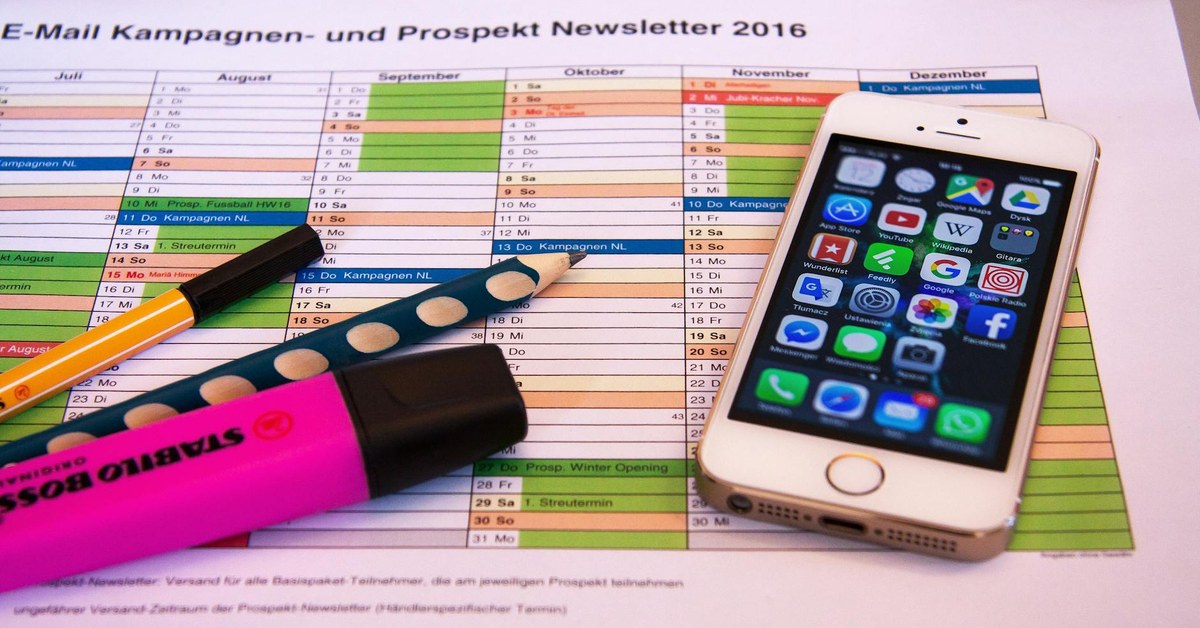

Picture a CEO who blocks 6:00 to 7:30 every morning on her calendar with a single word: Think. No agenda, no dial-in link, no pre-read deck. For eighteen months, that block has survived board weeks, product launches, and two acquisitions. Her chief of staff guards it like a vault door. Colleagues initially found it eccentric; now three of her direct reports have copied it. She credits the practice with every major strategic pivot her company has made in the past two years — not because the answers appeared during those ninety minutes, but because without them she would never have formulated the right questions. In a corporate culture that venerates action, scheduling time to simply think feels radical. The data suggests it is indispensable.
You should schedule thinking time like a meeting because unprotected reflection is the first casualty of a busy calendar. McKinsey research shows that over-scheduling leaves only 15% of the executive week for strategic thinking, yet leaders who protect two or more hours of daily focus time outperform peers by 40%. Treating thinking time as a fixed, recurring calendar entry — complete with a start time, end time, and do-not-disturb status — gives it the structural weight needed to survive the relentless pressure of incoming requests.
The Strategic Deficit: What Happens When Leaders Stop Thinking
The modern executive calendar is a monument to responsiveness. Every slot is spoken for — stand-ups at dawn, cross-functional syncs before lunch, vendor reviews through the afternoon, and a cascade of Slack threads filling whatever gaps remain. The Harvard CEO Time Use Study found that the average executive retains only 6.5 hours of unscheduled time per week, and much of that is consumed by ad-hoc requests rather than deliberate reflection. Strategic thinking does not appear on anyone's meeting invite, so it quietly disappears from the schedule altogether.
The consequences of this deficit are not abstract. Without dedicated thinking time, leaders default to pattern-matching against past experience rather than generating novel solutions for new problems. Decisions become reactive, driven by the most recent email or the loudest voice in the room rather than by careful analysis. McKinsey's research on executive effectiveness underscores the cost: over-scheduling leaves only 15% of the week for strategic work, and that figure drops further when travel, administrative tasks, and unplanned interruptions are factored in.
The irony is sharp. Organisations pay senior leaders precisely for their judgement — the ability to synthesise complex information, weigh trade-offs, and chart a course through uncertainty. Yet the typical corporate calendar systematically prevents leaders from exercising that judgement by filling every available hour with collaborative activity. Scheduling thinking time like a meeting is not self-indulgence; it is a structural correction to a systemic failure in how leadership time is allocated.
Why a Calendar Entry Succeeds Where Good Intentions Fail
Most executives acknowledge that they need more time to think. The intention is sincere and nearly universal. Yet intention without structure is worthless in a calendar-driven culture. When thinking time exists only as an aspiration — something to do after the meetings end, during the commute, over the weekend — it is perpetually displaced by commitments that carry the structural authority of a calendar entry. Executives who time-block are 28% more likely to feel in control of their schedules, according to Harvard Business Review, precisely because blocking converts intention into commitment.
The Time Blocking framework explains the mechanism. By assigning every hour a specific purpose, leaders create a visible claim on their own attention. A thinking block marked in the calendar carries the same visual weight as a board meeting or a client call. Colleagues who might casually overwrite an empty slot will hesitate to override a named block. Calendar tools reinforce this: a busy or do-not-disturb status during a thinking block automatically declines conflicting requests, removing the social friction of saying no in person.
The difference between scheduled and unscheduled thinking time is analogous to the difference between a gym membership and a personal training appointment. The membership represents good intentions; the appointment creates accountability. Average professionals already spend 4.8 hours per week scheduling and rescheduling meetings, according to Doodle. Adding a protected thinking block to this system costs no additional coordination overhead — it simply claims time that would otherwise be lost to calendar fragmentation or low-value meetings.
The First Ninety Minutes: Claiming Your Cognitive Prime Time
Not all hours are created equal for strategic reflection. Neuroscience research consistently identifies the first 90 minutes after a full rest cycle as the period of peak cognitive performance for complex, non-routine thinking. Protecting the first 90 minutes of the working day from meetings increases weekly output by the equivalent of a full extra day — a staggering return on a relatively modest investment of calendar real estate. Yet this is precisely the window most commonly surrendered to early-morning stand-ups, team syncs, and cross-time-zone calls.
Leaders who claim this window for thinking report qualitative benefits that transcend productivity metrics. The morning thinking block becomes a forcing function for strategic clarity: before the day's demands fragment attention, the leader has already identified the one or two decisions that will matter most, rehearsed difficult conversations, or stress-tested an emerging plan. By the time the first meeting begins, the strategic frame is already set, and every subsequent interaction is more focused because of it.
Implementing a morning thinking block requires negotiation, not just assertion. Leaders must work with executive assistants, direct reports, and global counterparts to establish the boundary. Buffer time of 10 to 15 minutes between the thinking block and the first meeting improves decision quality by 22%, according to Microsoft research, because it allows the leader to transition from reflective to collaborative mode without cognitive whiplash. The investment in setting up this system pays for itself within the first week.
Designing a Thinking Session That Actually Produces Insight
Blocking time is necessary but not sufficient. An unstructured ninety minutes can easily degrade into email triage or unfocused rumination. The most effective leaders design their thinking sessions with the same rigour they bring to any high-stakes meeting — a clear objective, a defined structure, and a tangible output. Some use a single strategic question written on a notecard the evening before. Others maintain a thinking journal with a running list of unresolved decisions that need reflective attention. The common thread is intentionality: the session has a purpose beyond simply not being in a meeting.
The Ideal Week Template framework provides useful scaffolding. Leaders who dedicate different thinking blocks to different domains — Monday for market strategy, Wednesday for people decisions, Friday for long-range planning — find that recurring themes build on each other across weeks. This thematic consistency is more productive than a single undifferentiated block because it allows the subconscious to work on problems between sessions. Leaders who batch similar cognitive work see 35% less context-switching fatigue, and the same principle applies to thinking time as to meetings.
Outputs matter. A thinking session should produce at least one artefact — a decision documented, a hypothesis articulated, a priority reordered, a question sharpened for a future discussion. Without a tangible output, the session lacks accountability and is far more likely to be sacrificed when scheduling pressure mounts. Over time, the accumulation of these small artefacts creates a strategic decision log that leaders find invaluable during quarterly reviews and board preparations.
Overcoming the Cultural Resistance to Visible Non-Doing
In organisations that equate busyness with value, scheduling an hour labelled Think feels like a provocation. Colleagues may view it as a luxury, an affectation, or a sign that the leader does not have enough on their plate. This cultural resistance is the single greatest barrier to adopting the practice, and it must be addressed head-on rather than worked around. Clockwise data showing that 30% of calendar entries are meetings that do not require the leader's presence provides useful ammunition: thinking time is not being carved from productive work — it is replacing time that was already being wasted.
Leading by example is the most effective antidote to cultural resistance. When a senior leader visibly protects thinking time and openly credits it for improved decisions, it reframes the practice from personal quirk to leadership discipline. Calendar transparency helps: making the thinking block visible — not hidden behind a vague label — normalises the practice and invites others to adopt it. Organisations that embrace calendar transparency reduce scheduling overhead by 40%, and visible thinking blocks are a natural extension of that openness.
The Theme Days framework can ease adoption at the team level. Rather than asking every individual to defend a personal thinking block, teams designate shared no-meeting windows — perhaps Tuesday and Thursday mornings — during which thinking, deep work, and asynchronous collaboration are the default. Asynchronous-first teams using this model save 15 hours per person per month on coordination, according to GitLab. The shift from individual heroism to collective norm makes thinking time culturally sustainable rather than perpetually embattled.
Measuring the Return on Scheduled Reflection
Sceptics will ask for proof that sitting and thinking delivers measurable value. The evidence is robust. Leaders who protect two or more hours of daily focus time outperform peers by 40% on strategic deliverables — a metric that encompasses initiative completion rates, revenue contribution from new strategies, and peer-rated leadership effectiveness. Calendar fragmentation, the enemy of thinking time, wastes 5.5 hours per week in gaps too short for substantial work, according to Reclaim.ai. Reclaiming even half of those fragmented hours for structured reflection delivers a significant performance uplift.
Qualitative measures tell an equally compelling story. Leaders who maintain a regular thinking practice report greater confidence in their decisions, faster resolution of ambiguous situations, and stronger alignment between their teams' activities and the organisation's strategic priorities. The thinking session becomes a forcing function for strategic coherence — a recurring opportunity to step back from the operational whirlwind and ask whether the current trajectory still makes sense. Default 60-minute meetings cause 70% of sessions to use more time than the agenda requires, but a well-designed 60-minute thinking block consistently uses less time than the insight it produces is worth.
The simplest proof of value is the calendar itself. Leaders who schedule thinking time and sustain the practice for a full quarter invariably refuse to give it up. The block becomes non-negotiable — not because a consultant or a book told them to protect it, but because the felt difference between weeks with thinking time and weeks without it is unmistakable. Scheduling thinking time like a meeting is not a productivity hack; it is a fundamental reorientation of how leaders spend their most finite and most valuable resource.
Key Takeaway
Schedule thinking time as a recurring, protected calendar entry — ideally during the first 90 minutes of your day — with a clear objective and a tangible output, treating it with the same structural weight as your most important meeting.