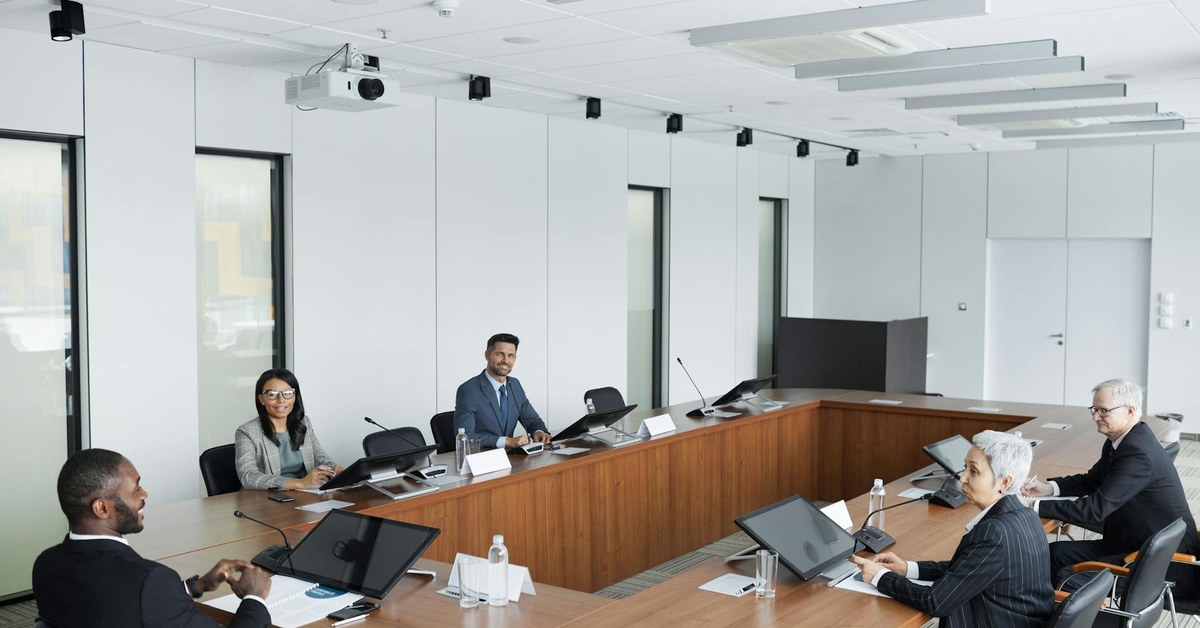

The average executive spends 23 hours per week in meetings. For CEOs, the figure is often higher — 30, 35, even 40 hours per week consumed by conversations, presentations, check-ins, and gatherings that feel mandatory but are rarely essential. The CEO meeting diet is not about doing less. It is about being present for fewer conversations and being more effective in each one. When the most senior leader in an organisation is perpetually in meetings, two things happen simultaneously: the CEO loses the thinking time needed for strategic leadership, and the organisation loses the speed that comes from empowered decision-making below the top. Every meeting the CEO attends is a meeting where others defer to authority rather than exercising their own judgment. Every hour the CEO spends listening to updates is an hour not spent on the three or four decisions that only the CEO can make.
A CEO meeting diet involves categorising every meeting into three tiers — must attend, must be informed, can delegate — and ruthlessly protecting at least 40 per cent of the working week for strategic thinking, relationship-building, and the high-impact decisions that only the CEO can make.
Why CEO Calendars Are the Most Inflated in the Organisation
CEO calendars inflate for three interconnected reasons: gravitational pull, risk aversion, and identity. Gravitational pull means that every function, every project, and every initiative wants the CEO's attention. Including the CEO on a meeting invitation signals importance, and excluding the CEO risks appearing negligent. The result is an inbox filled with invitations that the CEO feels obligated to accept, not because their presence is necessary, but because declining might send the wrong signal.
Risk aversion compounds the problem. CEOs attend meetings because they fear missing information that could affect a critical decision. The underlying belief is that being in the room is the only way to stay informed. This belief was arguably true when information flowed primarily through verbal channels, but in an era of dashboards, written briefs, and async updates, it is a costly anachronism. Professionals spend four hours per week preparing for status meetings that could be handled asynchronously — the CEO is the ultimate victim of this pattern.
Identity plays a subtler role. Many CEOs define their value through engagement and availability. Being in meetings feels like leading. The alternative — sitting alone with a blank page, thinking about the company's future — feels less productive, even though it is orders of magnitude more valuable. The CEO meeting diet requires a fundamental shift in self-perception: from leader-as-present to leader-as-strategic.
The Three-Tier Meeting Framework for CEOs
Every meeting on the CEO's calendar falls into one of three tiers. Tier one: must attend. These are the meetings where the CEO's presence is genuinely irreplaceable — board meetings, critical client negotiations, strategic decisions that define the company's direction, and one-on-ones with direct reports. Tier one should represent no more than 30 to 40 per cent of the CEO's meeting time, and each meeting should pass the NOSTUESO test: stated purpose, expected outcomes, and an accountable owner.
Tier two: must be informed. These are meetings where the CEO needs to know the outcome but does not need to participate in the discussion. Leadership team operational reviews, department updates, and project milestone check-ins typically fall here. For tier two meetings, the CEO receives a written summary within 24 hours and reviews it on their own schedule. This approach is more efficient than attendance and often produces better-quality information because the summary distils the discussion to its essential outputs.
Tier three: can delegate. These are meetings that the CEO currently attends out of habit, obligation, or gravitational pull but where their presence adds no unique value. All-hands preparation meetings, vendor evaluations, interview panels, and cross-functional planning sessions usually belong here. The CEO delegates attendance to a direct report, who attends with decision authority and reports back only if escalation is needed. Each meeting moved from tier one to tier three frees CEO time for strategic work while simultaneously empowering the leadership team.
Protecting Strategic Thinking Time
The most important outcome of the CEO meeting diet is not fewer meetings — it is more thinking time. Strategic leadership requires uninterrupted blocks of two to three hours for deep reflection on competitive positioning, organisational design, talent strategy, and long-term vision. These blocks are impossible when the calendar is a solid wall of 30-minute meetings separated by 23-minute recovery periods. The CEO who never thinks deeply leads reactively, making decisions based on the most recent input rather than the most important insight.
Block a minimum of two hours per day as CEO thinking time. Treat these blocks as immovable commitments — more important than any meeting, because they are the blocks where the CEO does the work that only the CEO can do. Back-to-back meetings reduce cognitive performance by 20 per cent; a CEO who arrives at a strategic decision meeting after four consecutive other meetings is operating with diminished judgment on the most consequential questions the organisation faces.
Use thinking time deliberately. Arrive with a single question: what is the most important strategic issue I need to resolve this week? Write about it, walk while considering it, or simply sit with it. The goal is not to produce a document but to produce clarity. Companies with meeting-free days report 73 per cent higher satisfaction — for CEOs, the equivalent is meeting-free mornings, which protect the highest-energy portion of the day for the highest-value cognitive work.
The CEO's Presence Problem: When Being There Makes Things Worse
There is a counterintuitive truth that most CEOs resist: their presence in meetings often degrades the quality of discussion. When the CEO is in the room, the dynamics shift. Participants self-censor, defer to authority, and seek approval rather than exploring alternatives. The decision that emerges is the one the group believes the CEO wants, not necessarily the one that best serves the organisation. This conformity effect intensifies with each additional attendee — Bain's finding that each person beyond seven reduces decision effectiveness by ten per cent hits even harder when one of those people is the CEO.
The CEO's absence, by contrast, creates space for honest debate. Middle managers who would never contradict the CEO in person will vigorously challenge each other's proposals. Junior leaders who stay silent in the CEO's presence will share insights that their daily experience uniquely qualifies them to offer. The decision that emerges may be different from what the CEO would have chosen — and that is often a feature, not a bug, because the people closest to the work typically have the best information.
This does not mean the CEO should be uninformed. It means the CEO should be informed through summaries, not through attendance. Read the meeting notes, review the decision, and intervene only when the outcome contradicts strategic direction. This approach preserves the quality of the decision-making process while maintaining the CEO's strategic oversight. Reducing meetings by 40 per cent increased productivity by 71 per cent — for CEOs, the gains are even larger because each hour reclaimed is an hour of the organisation's most expensive and most strategically important resource.
Implementing the Diet Without Losing Visibility
The most common fear CEOs express about reducing meetings is losing touch with the organisation. This fear is legitimate but addressable. Replace meeting attendance with three alternative channels: a weekly written brief from each direct report, a monthly skip-level lunch with randomly selected employees, and a quarterly walk-through of each department. These three channels provide broader and more accurate visibility than any meeting calendar, because they access information that meetings systematically miss — front-line reality, unfiltered employee sentiment, and cross-functional friction.
The written brief follows a strict format: three accomplishments, three priorities, one risk, and one request. Each direct report submits theirs by Monday morning, and the CEO reviews all of them in 30 minutes. This 30-minute investment replaces what would otherwise be five to eight hours of individual update meetings, while producing information that is more considered and more complete. Written communication forces clarity in a way that verbal updates do not.
Skip-level conversations — informal lunches or coffees with employees two or three levels below the CEO — provide the ground truth that no amount of executive-level meetings can replicate. These conversations reveal what is actually happening in the organisation, not what the CEO's direct reports think the CEO wants to hear. The information is unfiltered, specific, and often surprising. One skip-level lunch per month produces more organisational insight than ten hours of operational review meetings.
Sustaining the Diet When the Calendar Fights Back
Meeting creep is relentless, and CEO calendars are its primary target. Every new initiative, every new hire, every new crisis generates meeting invitations that erode the diet. Sustainability requires a gatekeeper — typically an executive assistant or chief of staff — who evaluates every invitation against the three-tier framework before it reaches the CEO's calendar. The gatekeeper's authority to decline tier two and tier three invitations on the CEO's behalf must be explicit and respected.
Conduct a calendar audit every quarter. Review every recurring meeting and reapply the three-tier classification. Meetings that were tier one six months ago may have evolved into tier two as the project matured and the team gained confidence. The CEO's direct involvement should scale inversely with the organisation's capability: as the team grows stronger, the CEO's meeting load should shrink. The average meeting has two to three attendees too many — the CEO is often one of them.
Finally, measure the impact. Track the CEO's tier-one meeting hours, thinking time hours, and decision turnaround time. Monitor organisational decision speed and leadership team satisfaction. If decision speed improves and leadership satisfaction increases — which the evidence strongly predicts — the data becomes the diet's strongest defender. Executives spend 23 hours per week in meetings. A CEO who reduces that to 12 has not disengaged — they have focused their irreplaceable attention on the work that matters most.
Key Takeaway
The CEO meeting diet categorises every meeting into must-attend, must-be-informed, and can-delegate tiers. By shifting the majority of meetings to tiers two and three, the CEO reclaims time for strategic thinking while empowering the leadership team to make decisions independently. The result is better decisions, faster execution, and a more capable organisation.